Meaning, Nature, Scope and Importance of Public Administration
Collective purpose, the politics–administration relationship, public choice, nature and scope, and how to judge administrative performance.
Paper I Unit 1 Introduction, Unit 5 Accountability and Control and Unit 8 Development Dynamics. Paper II Unit 2 Philosophical and Constitutional Framework of Government and Unit 14 Significant Issues in Indian Administration.
From Collective Purpose to Public Action
Administration is coordinated activity directed towards an objective. Organisation gives that activity a structure by allocating work and authority. Management brings people, information and resources together to perform the work and adapt as conditions change. The terms overlap. They answer different questions about the same activity. A municipal water programme can be studied through its mandate and obligations, the bodies that own and operate its assets, or the way managers schedule maintenance.
Public Administration studies and carries out the organised use of public authority. Its concerns include implementation, policy advice, regulation, service delivery, management of public funds and accountability. A state department, a municipality and an independent public regulator exercise different kinds of authority. A contracted firm can perform part of a public service while the competent public institution retains duties defined by law and contract.
Woodrow Wilson’s 1887 essay on the study of administration called for systematic attention to how government executes its tasks. The politics–administration distinction helps locate democratic responsibility and protect professional administration. An absolute separation is difficult to sustain. Officials influence what leaders see through advice, records and policy options. Frontline officials interpret rules when cases vary. Elected authorities remain responsible for the choices within their jurisdiction.
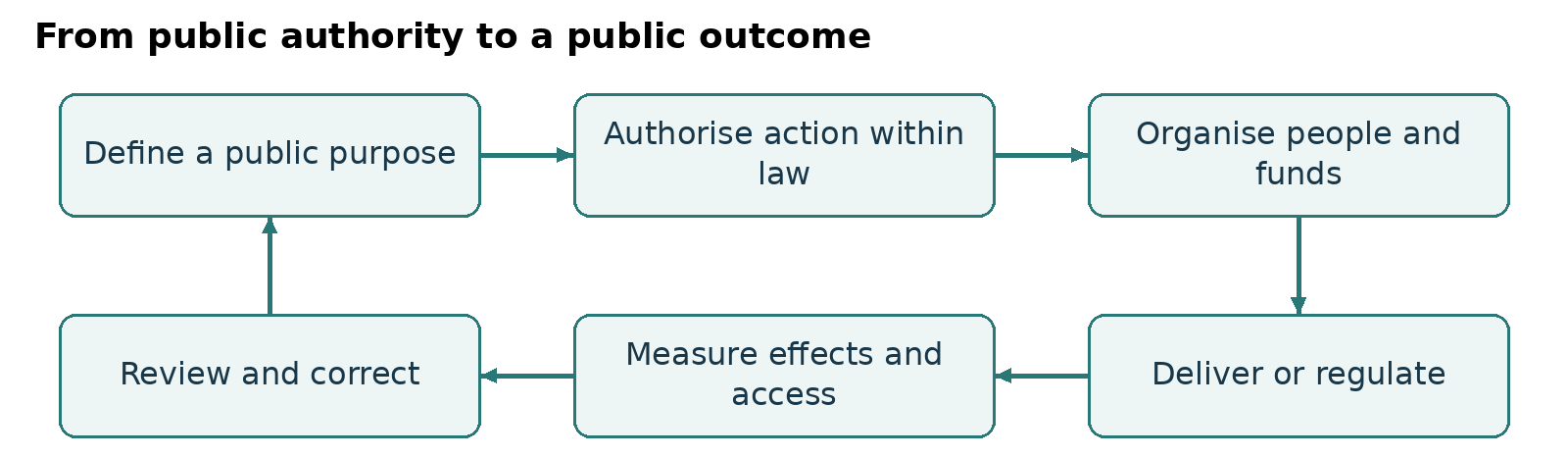
Figure 1 From public authority to a public outcome
Wilson and the Politics Administration Relationship
Wilson wrote in the context of American civil service reform, when patronage and the growth of governmental responsibilities made competent execution a subject of public concern. His 1887 essay called for a systematic study of what government could properly undertake and how it could carry out its work effectively. Professional methods, comparative learning and organisational reform could improve execution, provided borrowed arrangements were adapted to a democratic setting. Public opinion should guide broad purposes and hold administration to account. Routine interference in individual decisions can undermine consistency and expertise.
The distinction has three uses in an answer. As a reform principle, it challenges patronage. As an allocation of roles, it distinguishes political responsibility for public choices from professional responsibility for advice and implementation. As an empirical description, it is incomplete. Officials frame alternatives, interpret ambiguous mandates and feed implementation evidence into policy. The district officer who explains why a uniform deadline would exclude remote applicants influences policy while the competent authority retains the power to decide.
Frank Goodnow’s distinction between the expression and execution of the state’s will sharpens the functional point. Institutions often perform both functions. A legislature can scrutinise execution, and officials can contribute to formulating the choices that political leaders authorise. This supports an answer organised around political accountability, professional competence and transparent administrative discretion.
Public Choice and Administrative Design
Public Choice uses economic reasoning to examine collective decisions. It asks how institutional rules shape the behaviour of voters, legislators, officials and organised interests. Buchanan and Tullock examined how decision rules trade off the cost of reaching agreement against the costs a collective decision can impose on others. Niskanen’s bureau model asks whether a bureau with superior information and a dominant supply position may seek a larger budget. Treat this as a conditional explanation. Professional norms, competing suppliers, audit and an informed political sponsor can alter the result.
| Mechanism | What to look for | Administrative response |
|---|---|---|
| Concentrated benefits and dispersed costs | Organised beneficiaries have stronger incentives to lobby than each individual taxpayer has to scrutinise | Disclose fiscal and distributional effects |
| Information advantage | A bureau knows costs and constraints better than its sponsor | Independent benchmarks and credible review |
| Weak competition | Few providers, high switching costs or services difficult to compare | Regulate quality and preserve continuity and access |
| Collective action problems | Individuals may benefit from shared action without contributing | Use enforceable rules or support collective monitoring |
The Ostroms’ work on polycentric governance expands the institutional question. Multiple centres of decision can learn and adapt at different scales if responsibilities, information and dispute resolution are clear. A city can set water quality standards while ward-level arrangements identify local distribution failures. Fragmentation arises if the centres have overlapping duties without coordination or unequal capacity to act.
A municipality invites bids for waste collection to improve cost and responsiveness. Where two credible providers serve different routes, comparative performance can reveal avoidable costs. Where one bidder controls vehicles and depot access, repeated tendering may yield little competitive pressure. A payment linked solely to tonnes can also favour densely populated routes. The analysis should test market conditions, political incentives and the public obligation to cover all areas.
The Paper I notes Challenges to Traditional Bureaucracy, New Public Management, Reinventing Government and Process Redesign and Good Governance extend these debates through New Public Administration, New Public Management, New Public Service and Good Governance. Use Public Choice to explain incentives, New Public Administration to examine social equity, New Public Management to analyse managerial instruments, and Good Governance to assess participation, legality and correction.
Nature and Scope
The integral view includes the work of all personnel contributing to public purposes, from technical and clerical work to policy advice. The managerial view concentrates on the functions through which executives direct and coordinate an organisation. A public hospital illustrates the difference. Integral analysis includes diagnosis, procurement, records and nursing. Managerial analysis examines how executives plan, staff, coordinate and oversee those activities.
Scope can be studied by function or sector. Functional analysis asks how staffing, budgeting, information and coordination work across government. Sectoral analysis asks how administration functions in health, education, policing or another substantive domain. Each approach supplies evidence the other needs. A general staffing rule can produce different effects in a rural clinic and a treasury because their work differs.
As a discipline Public Administration draws on political science for authority and accountability, economics for incentives and allocation, sociology for informal groups and inequality, and management for organisation and operations. Its analytical work can be systematic and evidence based. Its practical work also requires judgement because objectives can conflict, knowledge is limited and officials must act within lawful authority.
| Comparison | Public administration | Private administration |
|---|---|---|
| Main authority | Constitution, statutes, delegated powers and public mandates | Ownership, contract and corporate governance within law |
| Obligations | Public purposes, lawful equality and reviewable use of authority | Organisational objectives and obligations to owners, workers, users and regulators |
| Measures of success | Outcomes, equity, legality, efficiency and citizen experience | Financial viability, quality, market performance and other organisational goals |
| Shared practices | Budgeting, process design, staffing and performance review | Budgeting, process design, staffing and performance review |
These are tendencies. A public enterprise can track commercial performance. A private body delivering a public programme may be subject to access and quality obligations. The important distinction is who can authorise the activity, who bears the consequences and who can require correction.
Public Administration After Liberalisation
Liberalisation eases restrictions on activity or entry. Privatisation concerns the transfer of ownership or control. Globalisation deepens cross-border flows and interdependence. Each changes administrative work through a different mechanism. Greater private participation increases the importance of contract design, regulation, inspection and consumer remedies. A regulator needs reliable information and independence from both providers and undue political influence, together with accountability for its decisions.
A municipality engages a private operator for waste collection. The municipality decides coverage and standards, the operator delivers collection, and residents report missed routes. Pay based only on tonnes collected can encourage neglect of low-volume settlements. Route verification, service obligations and a complaint mechanism help connect contract incentives to the public purpose.
How to Judge Administrative Performance
Economy concerns the price and quality of inputs. Efficiency relates outputs to resources used. Effectiveness asks whether the intended result occurred. Equity asks how benefits and burdens were distributed. The same programme can perform differently on each dimension. A low-cost application centre may process many claims per employee while remaining inaccessible to remote residents.
To assess a public service, identify the output and the outcome separately. A housing office issues sanctions as an output. Actual occupation of safe and usable homes is closer to the outcome. Study delays and failed transitions between sanction, construction and occupancy. A public administrator needs both operational measures for diagnosing work and outcome measures for judging whether the work served its purpose.
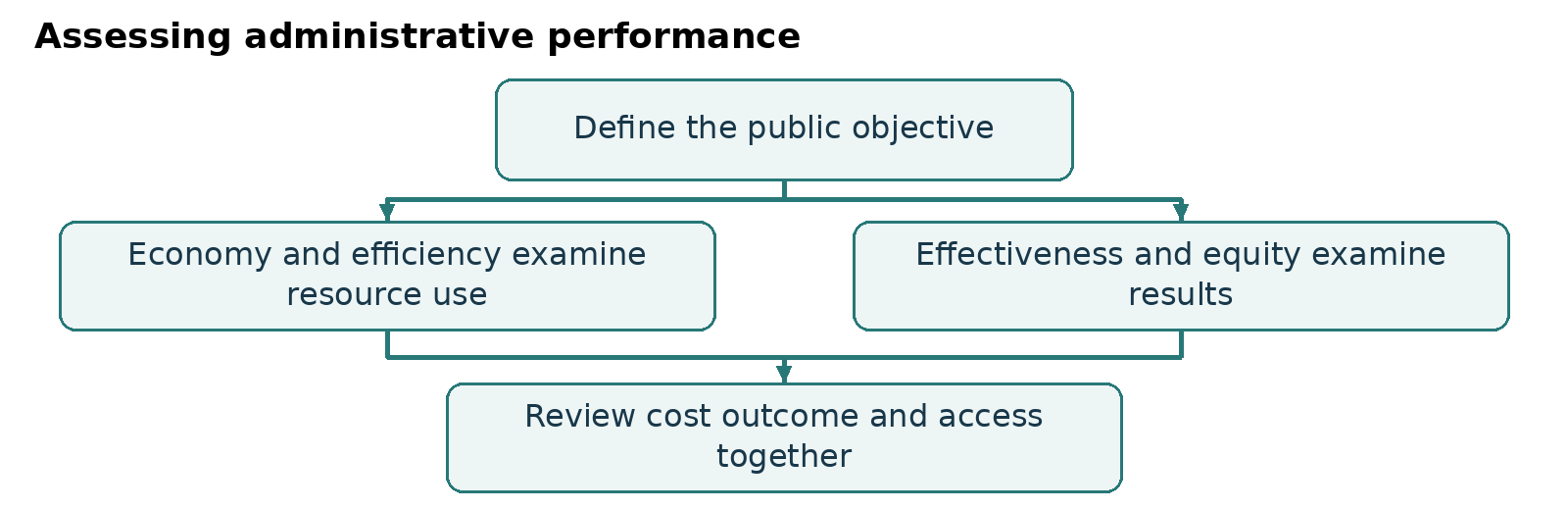
Figure 2 Assessing administrative performance
How does publicness affect the way administrative efficiency should be measured?
Answer direction. Define public authority and distinguish managerial efficiency from the wider public mandate. Use the waste example to show how a low-cost arrangement can reduce access. Explain how legality, equity and verified outcomes change the assessment.
📣 Join our community