New Public Management, Reinventing Government and Process Redesign
NPM, reinventing government and business process redesign, with their limits.
Paper I Unit 1 Introduction, Unit 4 Organisations and Unit 11 Techniques of Administrative Improvement. Paper II Unit 9 Financial Management and Unit 10 Administrative Reforms since Independence.
Economic Foundations of New Public Management
Public Choice applies economic reasoning to political and bureaucratic behaviour. It examines how incentives affect officials, elected representatives and organised interests. A bureau may seek a larger budget because budgets bring resources, influence or organisational security. The argument provides a hypothesis to test. Professional norms, public service motivation and political scrutiny can produce different behaviour.
Principal–agent theory examines delegated work where the principal and agent have different information and possibly different objectives. A municipality may hire a contractor for waste collection while finding it difficult to observe the quality of every route. Verification, complaint records and auditable service standards can reduce the information gap. The same reasoning applies when departments delegate to field units.
Transaction cost reasoning compares the full cost of alternative governance arrangements. Outsourcing involves tender design, monitoring, enforcement, transition and possible renegotiation in addition to the contract price. In-house provision has coordination and managerial costs. The comparison matters most where assets are highly specialised, service quality is difficult to specify or continuity is critical.
Christopher Hood described doctrines associated with NPM, including hands-on management, explicit performance standards, emphasis on output control, disaggregation, competition, private-sector management styles and discipline in resource use. These doctrines can appear in different combinations. A performance agreement inside government and a competitive concession are distinct instruments with different risks.
Reinventing Government
David Osborne and Ted Gaebler framed government as capable of being mission driven, results oriented, decentralised and entrepreneurial. The distinction between steering and rowing separates setting public direction from delivering a service. A public authority can establish objectives and commission delivery while retaining oversight. The practical issue is whether it can enforce obligations when service outcomes are hard to measure or providers are few.
Reinvention also stresses prevention, community involvement and attention to service users. These ideas can support reform without transferring ownership. A department may delegate routine decisions, redesign an application process and use user feedback while retaining direct provision. Entrepreneurial discretion must remain within appropriations, procurement rules and the legal mandate.
| Instrument | Suitable condition | Design safeguard |
|---|---|---|
| Performance agreement | Objectives can be specified and the agency controls key inputs | Track quality, equity and outcomes alongside output |
| Competitive contracting | Credible providers and verifiable standards exist | Include audit access, continuity and user remedies |
| Managerial autonomy | A unit has identifiable responsibilities and capable leadership | Record decision rights and review results |
| User choice | Users can compare options and switch without undue costs | Protect high-cost users and maintain service standards |
| In-house redesign | Functions are integrated or sensitive and process delays are identifiable | Remove duplication while retaining controls that address real risks |
Business Process Reengineering
Business Process Reengineering examines the entire sequence through which a service or transaction is completed. It can change who acts, when evidence is checked, how information flows and where responsibility sits. Business process improvement usually makes smaller changes to an existing process. Digitisation converts records or activities into digital form. Automation uses technology to perform tasks. Each can contribute to redesign when it addresses the underlying problem.
Begin with the service outcome and trace the current process with staff and users. Identify waiting time, repeated data entry, unnecessary movement, rework and checks required by law or risk. Separate a control’s objective from its historical form. An approval intended to prevent duplicate payment might be supported by a reliable duplicate check and periodic audit. A legally required sanction still needs the competent authority.
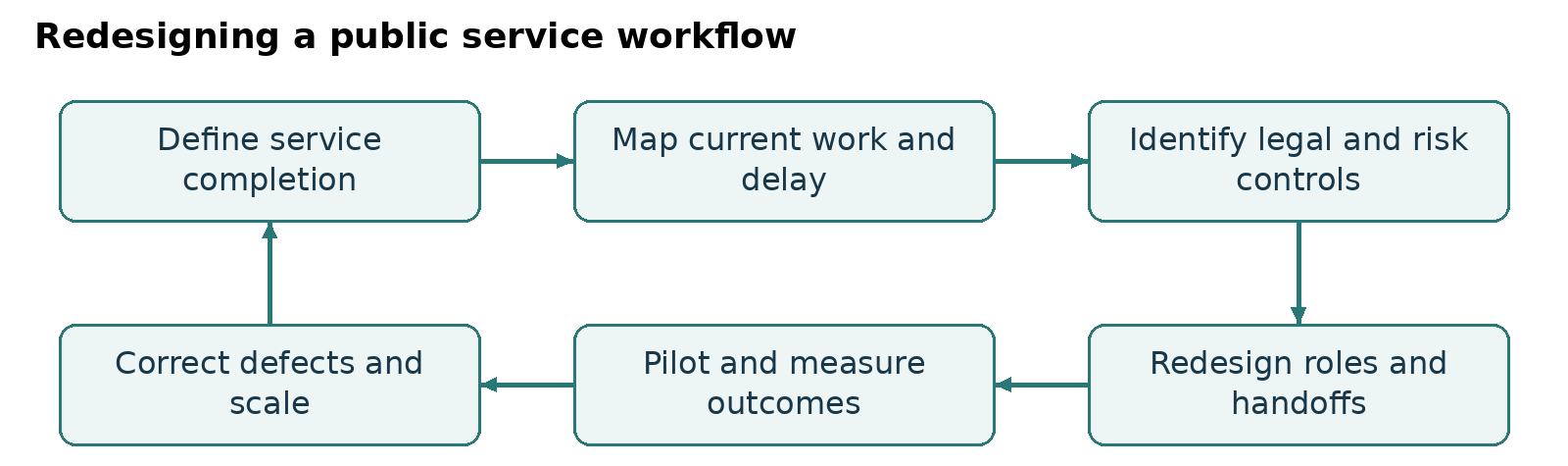
Figure 8 Redesigning a public service workflow
Worked Application to a Payment Workflow
A department submits a payment claim. The treasury checks the sanction and accounting details, the bank executes payment and the department confirms delivery. Suppose claims circulate repeatedly because the budget code or beneficiary identifier is inconsistent. Converting the same forms into electronic files may improve transmission while leaving the rework intact.
A redesign can validate codes at entry, retrieve authoritative data where lawful, preserve maker-checker separation and assign rejected transactions to a named owner. The redesigned process should distinguish a failed payment from a pending acknowledgement. Reconciliation should match the department’s instruction, the treasury record and the banking response. Users need a route to correct genuine mismatches and obtain a reasoned status.
Evaluate the change using median and tail processing times, rework rates, actual payment completion and unresolved exceptions. Compare outcomes across user groups and locations. Shorter processing time has limited value if rejected claims are silently removed from the count. Pilots can expose such effects before scale-up.
Limits and International Diffusion
Managerial reforms travel through policy learning, professional networks, international organisations and reform programmes. Local rules, provider markets and administrative capacity determine what can be transferred. Disaggregating a function into several agencies may improve accountability for specific outputs while increasing the cost of coordination across the whole service. A process owner and common data definitions can address some interface problems.
Redesign can also centralise power through software and standard categories. Inaccessible systems may transfer administrative work to citizens. A strong design retains assisted access, logs exceptions, protects data and assigns responsibility for correction. Its success depends on how reliably the complete service works under ordinary and exceptional conditions.
Managing the Transition
An improved process must work during the transition as well as after it. Identify who owns the old records, how pending cases move to the new workflow and what happens when an automated check fails. Parallel verification can help during a pilot, but it should have a defined purpose and end date. Otherwise the reform can add a second workflow to the first.
A performance contract also needs a transition plan. Set a baseline, specify independent verification and define escalation if the provider fails. A public authority should be able to maintain the service while resolving a contractual dispute. These arrangements make the transaction cost comparison more realistic.
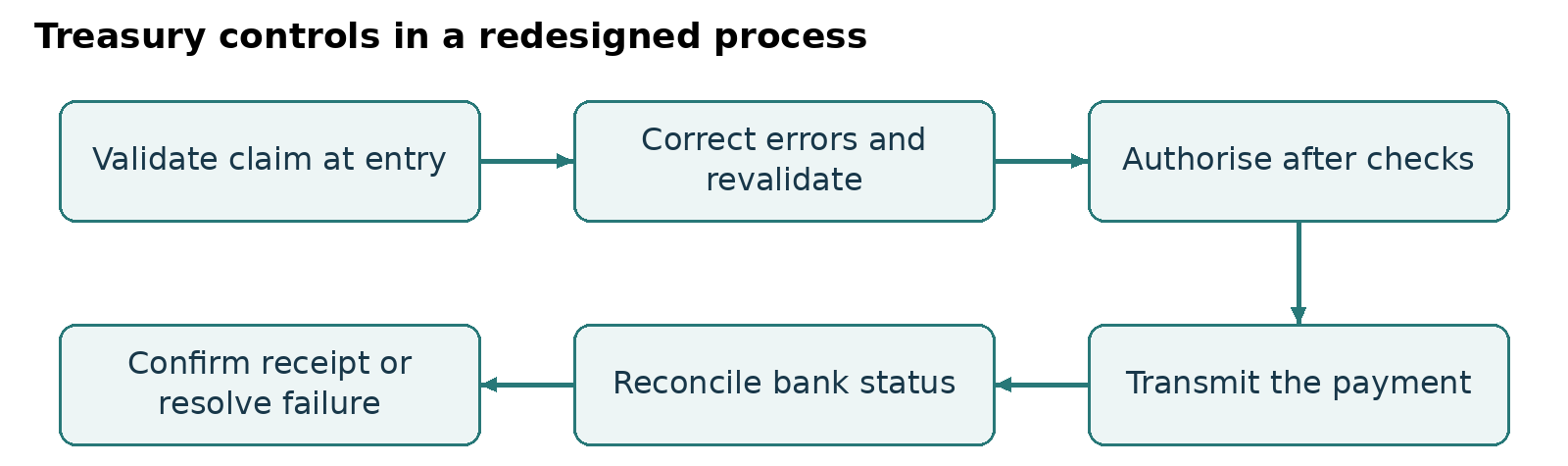
Figure 9 Treasury controls in a redesigned process
Why does digitising an existing process often fail to improve service delivery?
Answer direction. Define redesign and explain the difference between automating a task and changing the workflow. Diagnose duplication, handoffs and exception handling in a payment example. Show how to preserve audit controls and test completion, timeliness and exclusion.
How does principal–agent theory explain the strengths and risks of performance contracting?
Answer direction. Identify divergent objectives and information asymmetry. Explain the role of standards and monitoring. Discuss gaming, transaction costs and public obligations.
Previous: Challenges to Traditional Bureaucracy | Next: Good Governance
📣 Join our community