Nature and Typologies of Organisation
Why organisations exist, the principles and their conditions, and why classifications differ.
Paper I Unit 4 Organisations, Unit 3 Administrative Behaviour and Unit 2 Administrative Thought. Paper II Unit 4 Union Government and Administration and Unit 7 District Administration since Independence.
Why Organisations Exist
An organisation coordinates continuing contributions from people whose tasks depend on one another. Division of work permits specialisation. Coordination joins these contributions into a common result. Authority assigns decision rights and makes it possible to resolve disagreement. A treasury could assign verification, authorisation and reconciliation to different staff, but the process works only when each group receives accurate inputs and knows who owns an exception.
Formal organisation consists of assigned roles, procedures and reporting relationships. Informal organisation emerges through trust, interaction and shared expectations. Informal networks can speed communication and help newcomers learn how work is done. They can also protect insiders, spread misleading information or resist change. Barnard’s cooperative perspective helps explain why official authority depends on communication and willingness to contribute. Organisational charts show who is entitled to decide. Observation reveals how people actually cooperate.
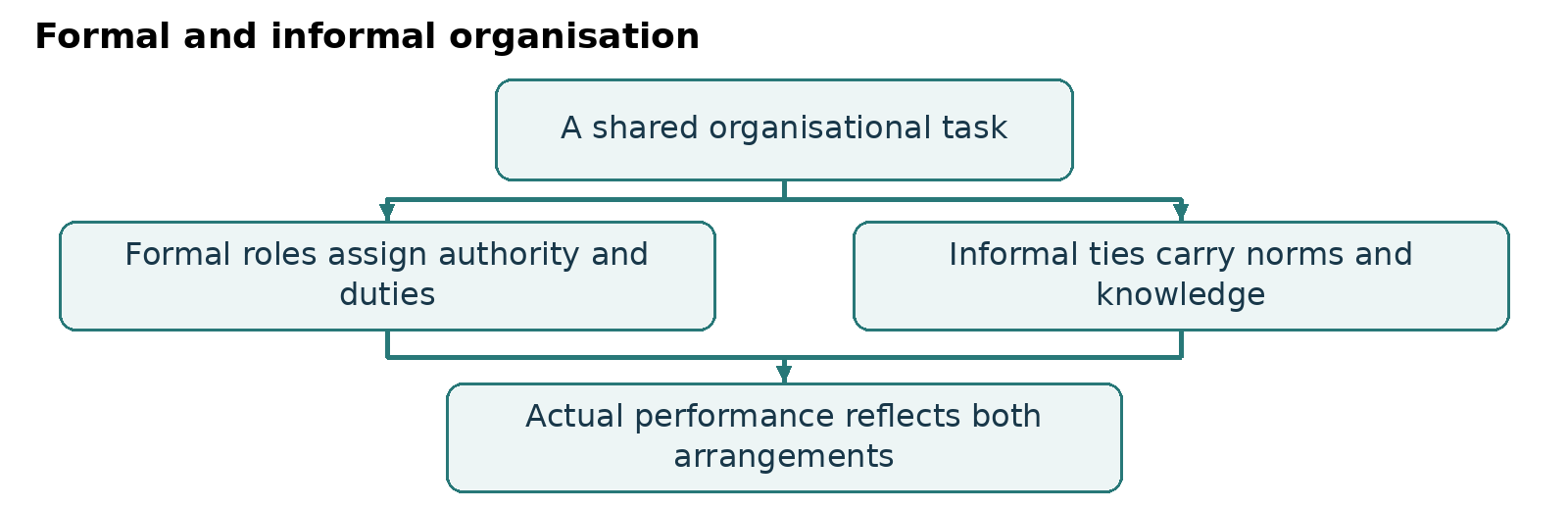
Figure 3 Formal and informal organisation
Principles and Their Conditions
| Principle | What it helps solve | What can go wrong |
|---|---|---|
| Specialisation | Repeated tasks develop proficiency | Units optimise their own work while service handoffs fail |
| Hierarchy | Escalation and responsibility become visible | Decisions accumulate at the top and field information loses detail |
| Unity of command | An officer can identify the line of operational responsibility | Specialists may need formal channels to influence technical standards |
| Delegation | Decisions move closer to the relevant facts | An assigned duty can exceed the powers or resources delegated |
| Coordination | Units reconcile timing, standards and dependencies | Meetings substitute for a shared owner, protocol or data definition |
| Span of control | A supervisor’s workload becomes manageable | A fixed number ignores task variety and staff competence |
Why Classifications Differ
A typology classifies organisations by a selected dimension. The same institution can occupy different categories because the dimensions answer different questions. Consider a public university. Its social function includes transmitting knowledge and maintaining cultural patterns. Its immediate beneficiaries include students. Its professional commitments may sustain moral involvement, while pay and employment conditions also matter.
| Typology | Categories | What it explains |
|---|---|---|
| Parsons by societal function | Economic production, political goal attainment, integrative work and pattern maintenance | The role the organisation performs in the wider social system |
| Blau and Scott by prime beneficiary | Mutual benefit associations, business concerns, service organisations and commonweal organisations | The group for whose benefit the organisation primarily operates |
| Etzioni by compliance | Coercive, remunerative or utilitarian, and normative power | How power combines with participant involvement |
| Weber by legitimate authority | Traditional, charismatic and legal-rational | Why people recognise a claim to command as legitimate |
Etzioni distinguishes alienative, calculative and moral involvement. Typical congruent pairs are coercive power with alienative involvement, remunerative power with calculative involvement and normative power with moral involvement. The pairs are analytical tendencies. A prison can rely heavily on coercion over inmates while employing paid professional staff. An association can rely on commitment from volunteers and salaries for its administrative staff. Identify whose compliance you are analysing before applying the typology.
Blau and Scott’s prime beneficiary is also distinct from a stakeholder. A service organisation can primarily benefit clients while affecting employees, taxpayers and suppliers. A commonweal organisation serves the public at large and still makes decisions that burden some individuals. The classification provides a starting point for accountability questions.
Worked Classification
A district disaster response network coordinates public agencies, volunteers and contractors. Public officers exercise statutory authority. Volunteers may contribute through moral commitment. Contractors respond to remuneration and contract obligations. The prime beneficiary of the coordinated response is the affected public. Applying a single classification to all participants would hide the different sources of compliance. An effective district plan records which decisions require public authority, who may carry out tasks and how shared information is validated.
Diagnosing a Coordination Failure
Consider a district office where files routinely wait at the interface between two teams. The formal chart says who supervises each team. It may give no one responsibility for the completed service. Trace which team creates a record, which uses it and what happens if it is incomplete. Informal calls can resolve individual cases, while a shared register and a defined exception owner can make the solution repeatable.
Barnard’s account of cooperation draws attention to common purpose, communication and willingness to contribute. His acceptance view of authority asks whether the recipient understands a communication, sees it as compatible with organisational purpose and personal interests considered as a whole, and can carry it out. Weber’s account asks how a claim to command gains legitimacy. Both questions matter in a field organisation where formally valid orders still depend on workable communication.
Can an informal organisation strengthen formal accountability?
Answer direction. Define both arrangements and explain how peer knowledge can surface mistakes and improve cooperation. Examine how informal pressure can suppress reporting. Use a district or treasury example and identify when recording decisions and establishing review channels protect accountability.
Previous: Meaning, Nature, Scope and Importance of Public Administration | Next: Development and Growth of Administrative Theories
📣 Join our community