Good Governance
Meaning, dimensions and tests of good governance in practice.
Paper I Unit 1 Introduction, Unit 5 Accountability and Control and Unit 11 Techniques of Administrative Improvement. Paper II Unit 8 Civil Services, Unit 10 Administrative Reforms since Independence and Unit 14 Significant Issues in Indian Administration.
Governance and Its Quality
Government refers to public institutions with lawful authority. Governance refers to the processes through which collective decisions are made, implemented and reviewed. It includes interactions among public agencies, private providers and civic organisations. Good governance is an evaluative idea. It asks whether those processes are lawful, effective, transparent, responsive, accountable and equitable.
The modern development debate gave governance greater attention when institutional capacity, predictable rules and public accountability came to be treated as conditions for development. Different organisations emphasise different aspects. A managerial approach gives weight to performance. A democratic approach gives weight to participation and public justification. A rights-based approach examines entitlement and remedy. Each raises questions that the other approaches can miss.
How Governance Principles Become Observable
| Principle | Administrative mechanism | Evidence to examine |
|---|---|---|
| Rule of law | Published authority, consistent criteria and review | Lawful decisions and correction of errors |
| Transparency | Accessible disclosure of rules, reasons and results | Whether information is usable by affected people |
| Accountability | Answerability and an authority able to require correction | Action on findings and verified remedies |
| Responsiveness | Time standards, escalation and feedback | Completion of the underlying service or remedy |
| Participation | Early consultation with relevant groups and public responses | Whether evidence or priorities affected the decision |
| Equity and inclusion | Accessible processes and examination of barriers | Differences in access, treatment and outcomes |
| Effectiveness and efficiency | Resources and processes aligned to defined results | Outcome quality and cost across the complete service |
| Consensus orientation | Deliberation over interests and feasible trade-offs | Reasons for the decision and treatment of dissent |
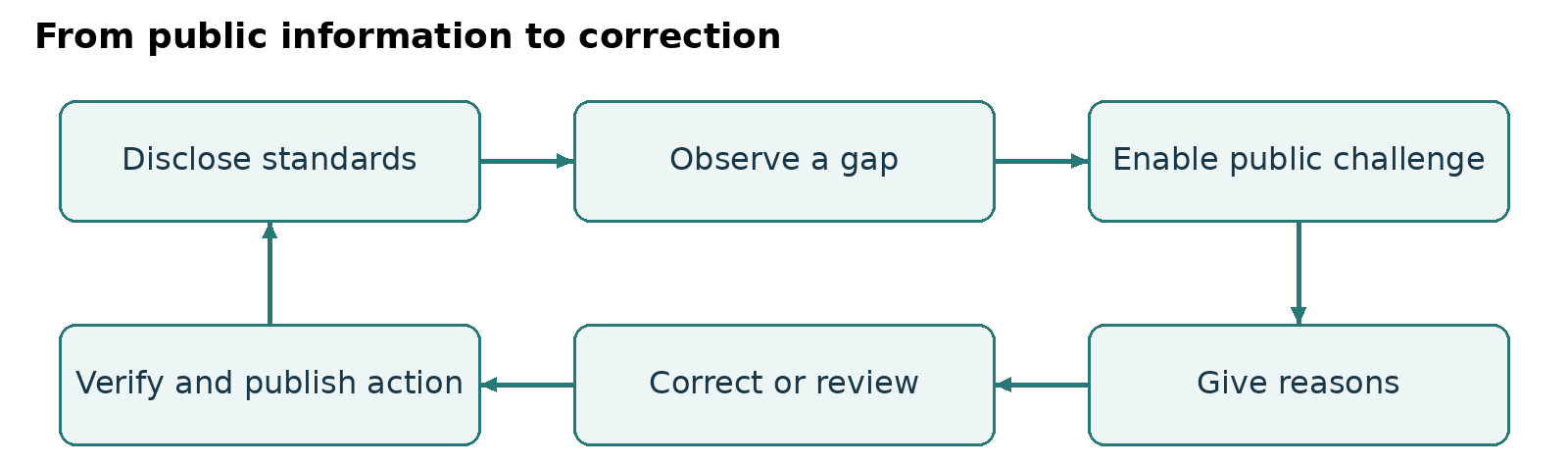
Figure 10 From public information to correction
Indian Instruments and Their Limits
A citizen’s charter states service commitments and responsibility. Its value depends on whether people know the standard, officials can meet it and a remedy exists when service fails. A statutory right to a service has legal consequences defined by the applicable enactment. A charter can clarify commitments even where enforcement depends on administrative arrangements.
The Right to Information framework enables access to records subject to legal conditions and supports proactive disclosure. A social audit combines records with public verification and follow-up. Grievance redress addresses service failures and administrative wrongs through a defined route. These instruments complement one another. Disclosure may reveal a delay, a grievance may resolve the individual case and a review of complaints may reveal a process defect affecting many people.
The Second Administrative Reforms Commission’s citizen-centric work offers a framework for discussing standards and grievance redress. Sevottam connects service commitments, grievance handling and delivery capability. The connection is important because raising a standard without staffing, authority or process changes can create a formal promise that staff cannot honour.
E-governance can lower costs and improve traceability. It can also move discretion into software rules or require citizens to resolve data errors they cannot inspect. Assisted channels, visible status, clear reasons and correction procedures are part of the administrative design. The number of digital transactions describes adoption. Successful completion across different groups gives stronger evidence of access.
Critique of the Governance Discourse
Good governance can become so broad that almost any reform claims the label. Translate each principle into a mechanism and an observable outcome. A district may publish every notice online and still fail to reach people without connectivity or literacy support. A consultation may be open to everyone and dominated by those with more time and resources.
Some reform frameworks assume that institutional forms can be copied between countries. Their operation depends on social relations, staffing, finance and enforcement. Rankings can flag differences and encourage comparison, but composite scores compress priorities and rely on choices about weights and data. Use disaggregated evidence and local experience before drawing strong conclusions about performance.
Good governance also involves trade-offs. Rapid decisions may be necessary in a crisis. Legality, recorded reasons and subsequent review can protect accountability while allowing speed. Participation may reveal serious distributive concerns that require more time. The proper balance depends on the stakes, available alternatives and scope for later correction.
A portal shows that complaints about water supply are closed within a target period. Verify whether service resumed, whether the resident received a reason and whether repeat outages fell. A dashboard that measures verified restoration and reopened cases gives a clearer basis for reform than closure counts alone.
A Governance Diagnostic for Mains Answers
Choose a problem and identify the decision, affected people and competent authority. Then ask what is disclosed, who can question the decision, whether the response contains reasons and who can require correction. Trace the cost and time for the user. This sequence distinguishes visible administration from administration that can be held to account.
Compare formal arrangements with actual outcomes. A grievance system may have a prescribed time limit and an escalation process while routine reports conceal reopened cases. Direct verification, random review and disaggregated results can reveal the difference. Governance measurement is strongest when several kinds of evidence converge.
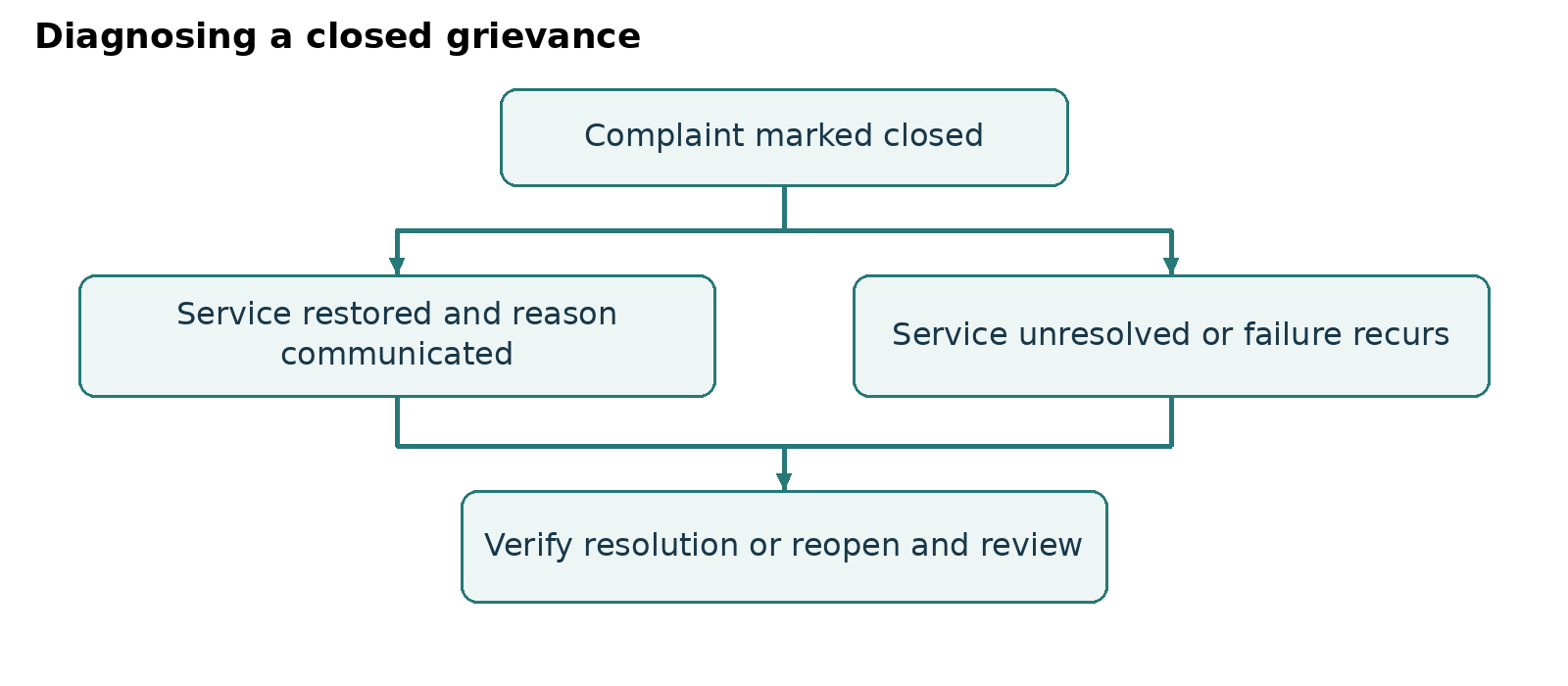
Figure 11 Diagnosing a closed grievance
Examine the relationship between transparency, accountability and responsiveness in citizen-centric administration.
Answer direction. Define the three dimensions and trace the sequence from disclosure to answerability and correction. Use a charter, complaint or audit example. Explain how capacity and inclusive access affect each step.
What are the limits of measuring good governance through composite indicators?
Answer direction. Explain what indicators make visible and how weighting, averages and proxy measures can conceal inequity. Use a local service example and propose a combination of outcome and process evidence.
Previous: New Public Management, Reinventing Government and Process Redesign | Next: Civil Society Organisations
📣 Join our community