Taylor and Scientific Management
The four principles, instruments, the movement, and its scope and limits in public administration.
Paper I Unit 2 Administrative Thought, Unit 11 Techniques of Administrative Improvement and Unit 3 Administrative Behaviour. Paper II Unit 10 Administrative Reforms since Independence.
The Factory Problem Taylor Addressed
Frederick Winslow Taylor studied industrial work where methods differed between workers and managers had little systematic knowledge of how tasks were performed. He argued that rule of thumb, unsuitable assignments, poor incentives and mistrust contributed to restricted output. He distinguished the tendency to conserve effort from deliberate group restriction of output. Workers might resist higher output when they expected managers to cut rates or eliminate jobs.
Taylor proposed an administrative arrangement for studying, designing and teaching work. Managers were to develop task knowledge and provide tools and instructions. Workers would be selected and trained for the task. The two sides would cooperate so that the chosen method could be carried out. A fair account of the approach must include this change in managerial responsibility alongside its emphasis on output.
The Four Principles
| Principle | Operational meaning | Application to a routine public process |
|---|---|---|
| Develop a science of work | Observe tasks, compare methods and establish tested standards | Measure time and errors at each stage of records verification |
| Select and develop workers scientifically | Match abilities to tasks and teach the standard method | Train staff in routine checks and exception identification |
| Bring method and workers together | Organise cooperation and supervise the agreed method | Give staff workable tools and correct faults discovered during use |
| Divide work and responsibility | Management plans and supports work while staff execute defined tasks | Managers maintain rules and staffing while operators verify each case |
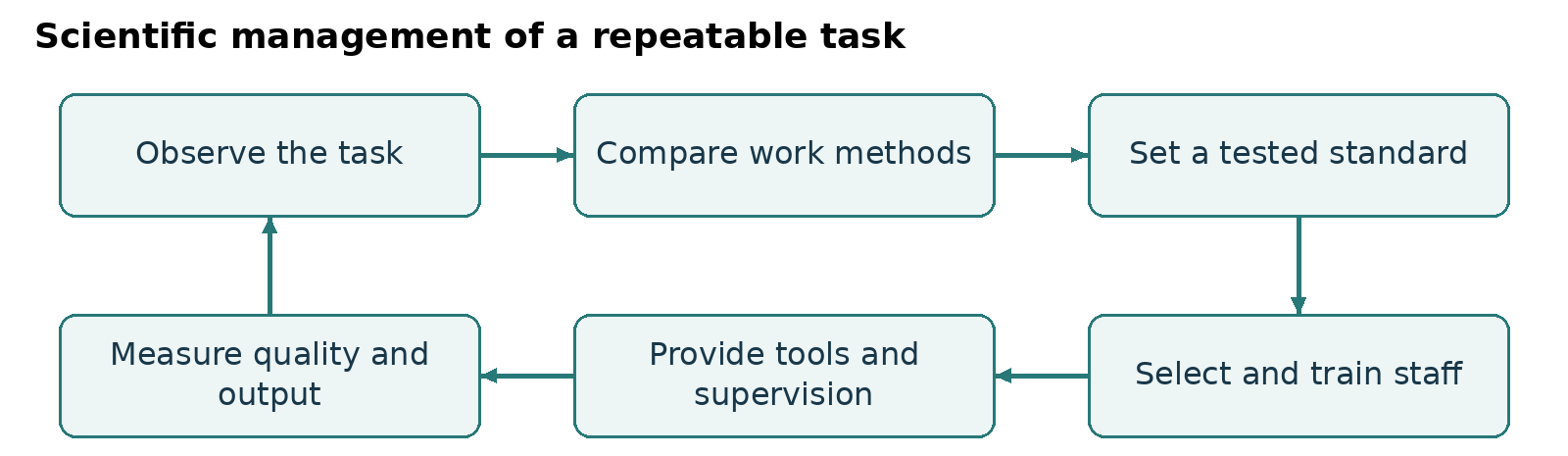
Figure 5 Scientific management of a repeatable task
Instruments and Their Logic
Time study estimates how long defined operations take under specified conditions. Standardisation defines the tools, procedures and work conditions used to produce a predictable result. A task standard depends on the observed cases and allowances used in the study. It loses validity when the task changes. Frank and Lillian Gilbreth are particularly associated with motion study and attention to movements and fatigue. Time and motion analysis can complement each other, although they developed through distinct contributions.
Taylor’s differential piece-rate scheme links payment to attainment of a task standard and uses different rates for different performance levels. Its premise is that output can be measured and that the worker has sufficient control over performance. If quality is hard to observe or the worker depends on incomplete inputs, a strong volume incentive can reward shortcuts and penalise staff for conditions outside their control.
Functional foremanship distributes supervision among specialists. Planning roles deal with matters such as routing, instructions, time and cost, and discipline. Shop-floor specialists supervise execution, speed, maintenance and inspection. The arrangement gives workers access to expertise. It can create conflicting directions unless responsibility and escalation are explicit. This creates a direct comparison with Fayol’s unity of command.
The mental revolution concerns a change in attitudes towards cooperation and productivity. Taylor expected improvements in output to create gains that management and workers could share. The argument is vulnerable where management captures the gains, job security is weak or workers lack influence over the standards used to assess them. Cooperation requires a credible institutional basis.
The Scientific Management Movement
Taylor’s shop studies illustrate the attempt to replace inherited methods with systematic observation. The pig-iron handling and shovelling accounts are useful for discussing task design, selection, workload and rest. They should be treated as historical illustrations with limited grounds for generalising. Henry Gantt is associated with task and bonus arrangements and visual scheduling. The Gilbreths extended the study of work motions, fatigue and human factors. These contributions show that the movement encompassed training and work design as well as timing.
Scope and Limits in Public Administration
Routine public work often benefits from standard procedures. Examples include indexing documents, preparing recurring reports and checking data fields. Complex cases require judgement, citizen interaction and an ability to recognise exceptions. A common standard can improve routine work when officials can deviate for recorded lawful reasons and when quality is reviewed alongside speed.
A treasury finds that bills repeatedly return because budget classifications are inconsistent. Observe the workflow and separate waiting from active processing time. Test validation at the point of entry. Train staff to identify legitimate exceptions and retain authorisation and audit controls. Compare rework, accuracy and successful payment before and after the change. Counting bills processed per clerk would miss rejection rates and downstream errors.
Testing a Task Standard
A manager observes 100 cases and finds that most routine verifications take six minutes. A minority require calls to another office and take longer. Setting one standard for all cases will create pressure to avoid atypical files. Separate routine and exception work, check that the sample reflects actual demand and include legitimate interruptions in the assessment. Compare error and completion rates as well as time.
Taylor’s framework supplies a disciplined way to ask which part of the task can be standardised. A behavioural analysis adds the effects of supervision and peer norms. A legal analysis asks which checks require authorised judgement. The three lenses can be combined. Data validation at entry can be standardised, while unusual evidence can go to an officer who records a reasoned decision.
Is Scientific Management compatible with citizen-centred administration?
Answer direction. Explain measurement, training and standardisation. Apply them to a routine process. Discuss how throughput targets affect difficult cases and how review, quality measures and discretion protect users.
Previous: Development and Growth of Administrative Theories | Next: Administrative Management
📣 Join our community