Administrative Management
Fayol, Mooney, Reiley, Gulick and Urwick, departmentalisation, delegation and coordination.
Paper I Unit 2 Administrative Thought and Unit 4 Organisations. Paper II Unit 4 Union Government and Administration, Unit 7 District Administration since Independence and Unit 10 Administrative Reforms since Independence.
Fayol and the Work of Management
Henri Fayol examined management across the whole enterprise. His framework distinguishes technical, commercial, financial, security, accounting and managerial activities. Within management he identified forecasting and planning, organising, commanding, coordinating and controlling. Planning sets a course. Organising creates roles and resources. Command directs work. Coordination integrates contributions. Control compares action with plans and standards and supports correction.
Unity of command means one subordinate receives orders from one superior for a given line of work. Unity of direction means activities pursuing the same objective operate under one head and one plan. The distinction matters when several departments share an objective. A district health programme can have a joint plan while staff retain operational reporting to their respective superiors.
| Fayol’s principle | Meaning in practice |
|---|---|
| Division of work | Specialisation improves proficiency where tasks recur |
| Authority and responsibility | Decision power accompanies answerability for its use |
| Discipline | Agreed obligations and standards support orderly work |
| Unity of command | A clear superior resolves conflicting operational instructions |
| Unity of direction | One plan integrates activities with a common purpose |
| Subordination of individual interest | Private advantage yields to the organisation’s legitimate objective |
| Remuneration | Compensation supports fair and sustainable contribution |
| Centralisation | The degree of concentration should suit the organisation |
| Scalar chain | A line of authority links levels and assigns escalation |
| Order | People and materials are placed where they can be used effectively |
| Equity | Managers exercise fairness in treatment |
| Stability of tenure | Continuity allows staff to gain experience and sustain work |
| Initiative | Personnel have room to propose and carry out improvements |
| Esprit de corps | Cooperation and team spirit support collective effort |
Fayol’s gang plank allows authorised lateral communication across the scalar chain. A direct conversation can resolve a field issue faster than sending it up and down two hierarchies. Supervisors still need visibility when the issue affects responsibility or requires formal approval. The device shows how classical management recognised the costs of rigid hierarchy.
Mooney Reiley Gulick and Urwick
Mooney and Reiley placed coordination at the centre of organisation. The scalar process distributes authority through levels. Functional differentiation separates kinds of work. Staff arrangements give access to advice and specialist support. Coordination integrates the results of specialisation around the common purpose. The line officer may decide, while staff specialists supply information and analysis. Advisory roles can influence outcomes considerably even where they lack final authority.
Luther Gulick used POSDCORB to classify executive functions. Planning specifies objectives and means. Organising creates the structure. Staffing recruits and develops personnel. Directing issues decisions and instructions. Coordinating integrates activities. Reporting communicates information and results. Budgeting concerns fiscal planning, accounting and control. Lyndall Urwick helped synthesise classical principles concerning structure, authority, span and coordination.
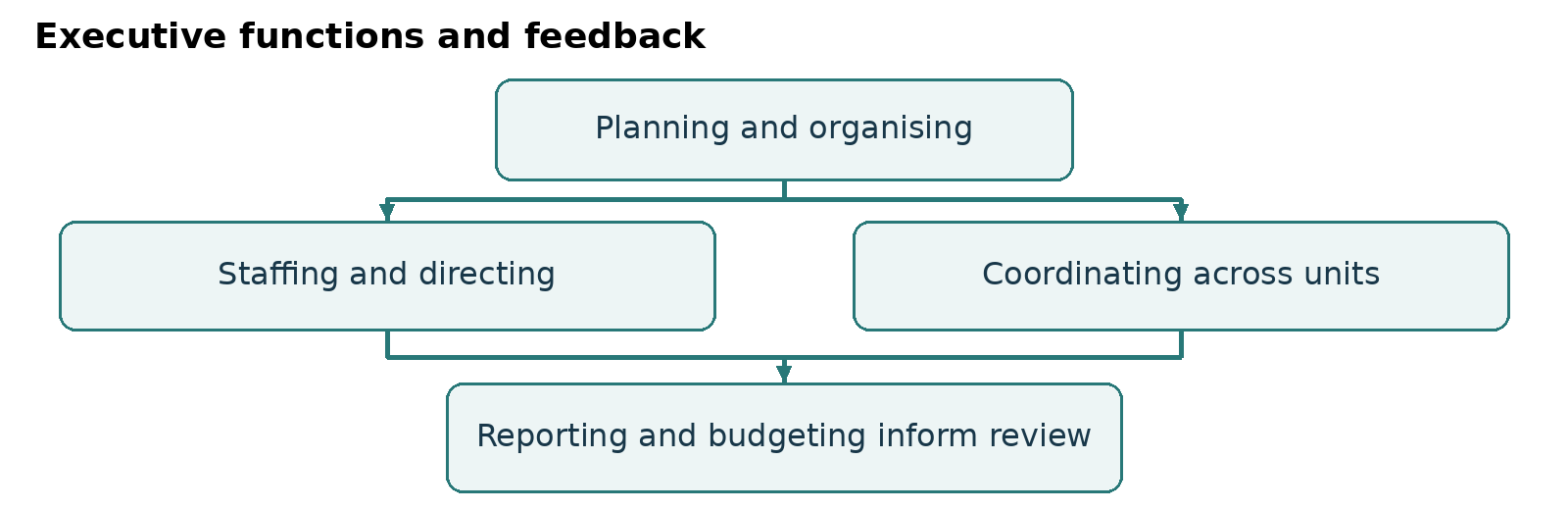
Figure 6 Executive functions and feedback
Departmentalisation and Design Tradeoffs
| Basis | Main advantage | Coordination problem |
|---|---|---|
| Purpose | Brings activities around a mission such as public health | Specialist functions can be duplicated across missions |
| Process | Concentrates a technique such as legal review or accounting | Technical priorities may dominate user outcomes |
| Persons or clientele | Adapts work to a group such as children or veterans | People may qualify under several categories |
| Place | Responds to territorial needs and local conditions | Standards and resources can vary across regions |
Span of control is the number of direct reports a superior can effectively supervise. Task complexity, geographical distance, staff experience and information systems affect the answer. Delegation gives an officer authority to act within defined bounds. The delegator still has supervisory responsibility and must provide resources, instructions and review. Coordination can use hierarchy, common rules, lateral communication and joint teams depending on the dependency.
During a flood, the district sets a common relief objective. Health teams maintain clinical protocols, engineers assess infrastructure and revenue staff coordinate assistance. The joint plan gives unity of direction. Defined reporting prevents conflicting orders. A shared incident log and named lead address coordination across functions.
Delegation and Coordination in Practice
Delegation involves assigning a task, granting the authority needed to act and retaining a framework of accountability. If field staff are asked to resolve complaints but cannot approve a correction, the duty has moved while the decision remains centralised. A delegation order can identify the class of cases, limits on action, records required and circumstances requiring escalation.
Coordination is especially difficult when one team’s output becomes another team’s input. A department can coordinate through a common standard where cases recur, through a named lead where action must be synchronised and through mutual adjustment when facts change rapidly. A standing meeting helps only if it produces decisions, responsible officers and follow-up. Classical design can therefore be expressed as an operational question about who decides, on what evidence and with what consequences.
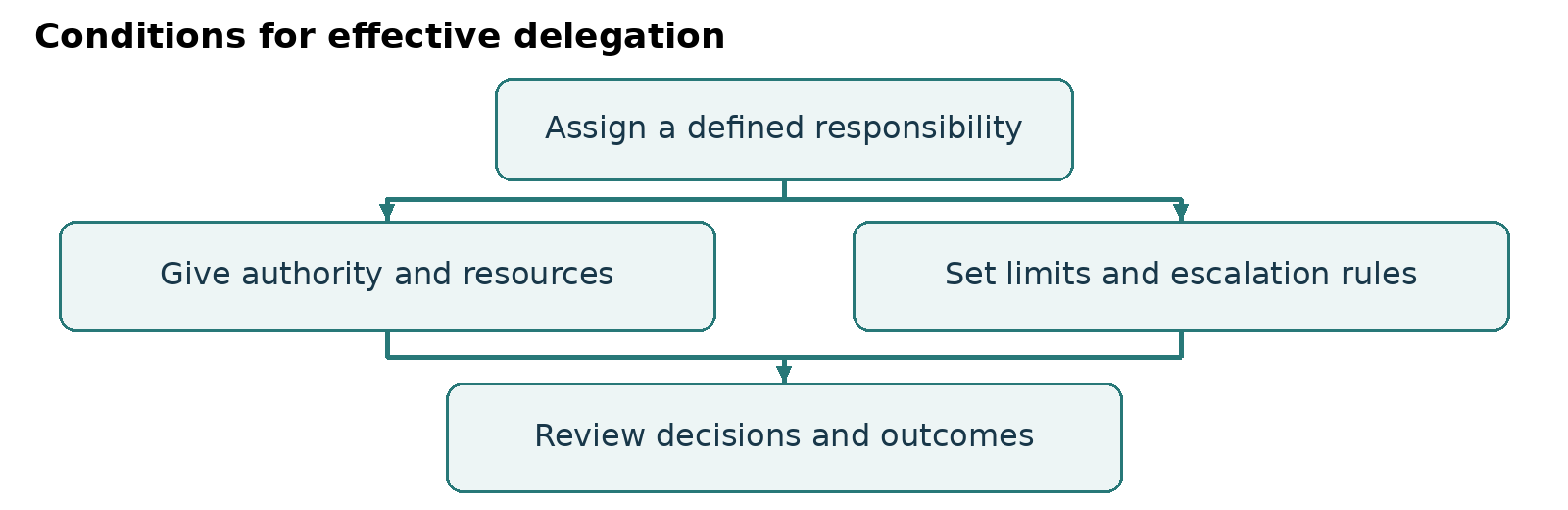
Figure 7 Conditions for effective delegation
Examine the continuing usefulness of POSDCORB in public administration.
Answer direction. Explain how it organises executive work. Apply the functions to a district programme. Discuss how substantive policy, citizen interaction and outcomes require analysis beyond executive technique.
Previous: Taylor and Scientific Management | Next: Max Weber and Bureaucracy
📣 Join our community