Organisational Structure, Processes and Functioning
Structure and process, field relationships, regulation and PPPs, environment and organisational change.
Paper I Unit 4 Organisations, Unit 3 Administrative Behaviour and Unit 11 Techniques of Administrative Improvement. Paper II Unit 4 Union Government and Administration, Unit 7 District Administration since Independence and Unit 10 Administrative Reforms since Independence.
Goals Structure and Process
Organisational goals describe desired results or conditions. Official goals appear in laws, charters and public statements. Operative goals are inferred from what the organisation actually rewards, funds and does. A municipal agency may officially prioritise equitable service while allocating resources chiefly to the areas that generate the most complaints. The difference directs attention to measurement, incentives and whose demands enter decisions.
Goal succession occurs when an organisation adopts new purposes after earlier ones are achieved or lose relevance. Goal displacement occurs when a means or internal interest takes priority over the original purpose. A relief authority shifting from emergency response to reconstruction may illustrate succession. An office that prioritises file movement over verified relief illustrates displacement. Competing goals, such as speed and error prevention, require explicit trade-offs.
Structure allocates work, power and reporting. Processes are the flows of information, decisions and resources through that structure. Functioning is what occurs when people use both in a particular environment. Changing an organisation chart rarely fixes a service if approvals, data flows and incentives remain misaligned.
Dimensions and Forms of Structure
| Dimension | What it measures | Main trade-off |
|---|---|---|
| Complexity | Differentiation across tasks, levels and locations | Expertise and coverage require more coordination |
| Formalisation | Extent to which rules and procedures specify conduct | Predictability may come at the cost of adaptation |
| Centralisation | Concentration of decision authority | Consistency and control can increase distance from local information |
| Integration | Mechanisms joining differentiated units | Coordination takes time and requires authority to resolve differences |
| Form | Where it helps | Main difficulty |
|---|---|---|
| Functional | Concentrates specialised work such as finance or personnel | Units may prioritise their function over the end service |
| Divisional or territorial | Groups work by mission, service or region | Expertise can be duplicated and standards may diverge |
| Matrix | Combines technical and project responsibility | Dual lines require clear decision rights and escalation |
| Project team or network | Combines expertise across existing boundaries | Temporary or shared responsibility can weaken continuity |
Centralisation can differ by decision. A headquarters may define accounting standards and delegate routine processing to field offices. Formalisation can protect local discretion by specifying who may exercise it and on what grounds. A matrix arrangement can work when technical sign-off, operational command and responsibility for resolving conflict are defined.
Organisational Forms in Indian Administration
| Form | Basis and working logic | Indian illustration | Main accountability question |
|---|---|---|---|
| Ministry and department | Executive machinery for policy, administration and coordination. A ministry can contain several departments | Ministry of Finance and its Department of Expenditure | Which decisions belong to the minister, department or attached and field offices |
| Statutory corporation | Constituted by legislation with powers, duties and governance defined by that law | Life Insurance Corporation under the LIC Act | How do statutory duties, management autonomy and oversight interact |
| Government company | Corporate form. Section 2(45) of the Companies Act includes companies with at least 51% of paid-up share capital held by the Central Government, one or more State Governments, or both. It also includes subsidiaries of such companies | NTPC Limited as an illustration of the company form | How do public ownership, board responsibility and commercial objectives coexist |
| Board or commission | A collective body whose powers depend on its legal or administrative basis | Central Pollution Control Board and Union Public Service Commission illustrate different mandates and legal bases | Which functions are advisory, administrative or binding |
| Ad hoc or advisory body | Constituted for a particular issue, period or advisory function | A time-bound administrative reform commission | Who may accept its recommendations and who implements them |
Distinguish legal form from function. A body called a commission may have constitutional status, statutory authority or an advisory mandate. The name alone tells little about appointment, independence or power to bind. Similarly, public ownership does not settle whether an organisation operates as a department, statutory corporation or company. For an institutional comparison use four tests: constituting authority, appointment and decision rights, financial arrangements, and review.
Headquarters and Field Relationships
Headquarters sets standards, allocates resources, coordinates policy and reviews performance. Field offices interpret local circumstances, carry out authorised decisions and supply feedback. Both need a shared account of what can be decided locally. A central rule protects consistency when decisions affect legal entitlements or public funds. Delegation helps when facts are local and delay is costly. The difficulty lies in classifying the decision and giving field officials both authority and the means to act.
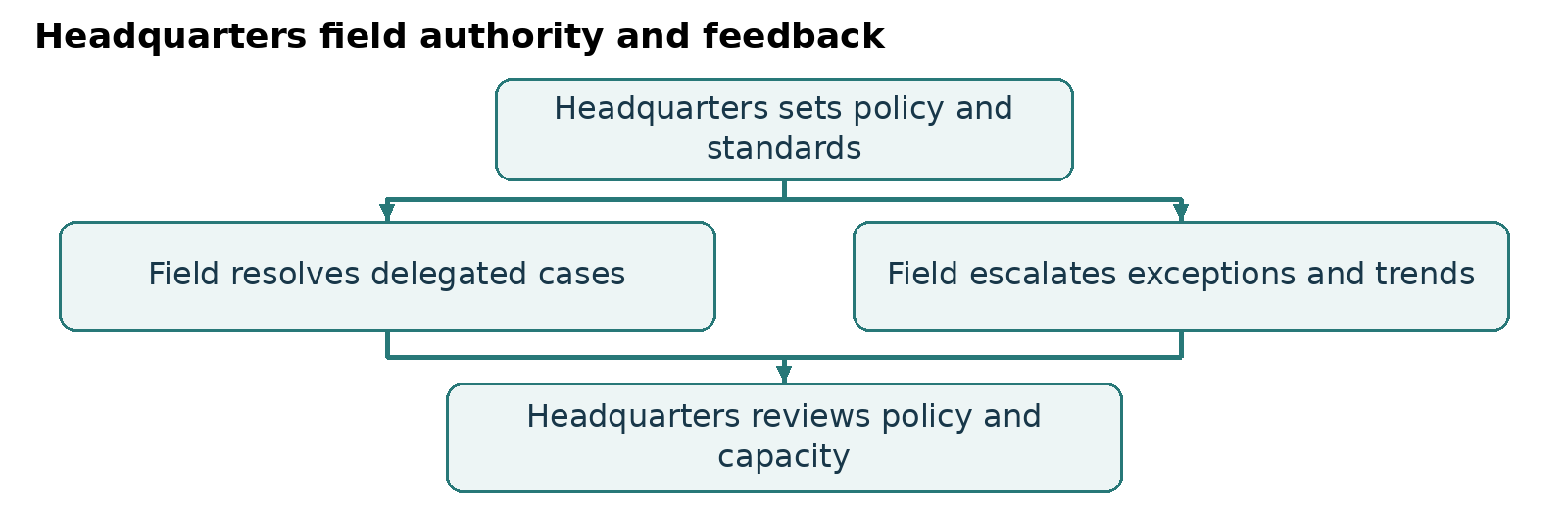
Figure 15 Headquarters field authority and feedback
A state headquarters sets common requirements for pension verification. District offices validate documents, resolve cases within their delegated authority and escalate exceptions that require a policy decision. If a document rule repeatedly excludes a class of eligible applicants, aggregated field evidence can support a redesign. Monitoring should distinguish recurring policy defects from individual errors.
Regulation and Public Private Partnerships
A regulator makes or applies rules within its mandate, monitors compliance and may exercise enforcement or adjudicatory powers where authorised. Sectoral expertise can improve oversight. Regulatory capture can develop when regulated entities dominate the supply of information or influence appointments and consultation. A credible arrangement combines capable staff, reasoned decisions, transparent consultation, appropriate review and safeguards against conflicts of interest. In telecommunications, TRAI illustrates the regulatory role. Distinguish the functions assigned to TRAI from the government’s licensing role and the dispute and appellate functions of the Telecom Disputes Settlement and Appellate Tribunal. Examine the mandate of each body when assessing independence and accountability.
A public–private partnership is a contractual arrangement through which a public authority and private participant share defined responsibilities and risks for an asset or service over time. Conventional procurement generally purchases a specified work or service. A concession can combine design, finance, construction, operation or maintenance and link compensation to tolls, annuities or performance. The actual allocation depends on the agreement.
| Decision | Appropriate test | Highway illustration |
|---|---|---|
| Construction and maintenance | Which party controls quality, time and costs | Link payments to milestones and maintenance standards |
| Land and approvals | Which party can legally and practically secure the prerequisite | Track readiness and specify consequences of delay |
| Demand and revenue | Who can best bear or manage variability | Compare toll-based exposure with a public annuity commitment |
| Fiscal commitment | What direct and contingent liabilities may arise | Record scheduled payments and stress-test termination or renegotiation |
| Citizen accountability | Who can investigate a service failure and enforce correction | Specify public standards, independent verification and complaint routes |
In a hybrid annuity highway arrangement, public construction support is combined with private financing for the remaining requirement and scheduled payments after construction under the concession. It illustrates the difference between assigning construction risk and assigning traffic risk. The exact obligations follow the contract. Risk transfer improves value only where the party receiving the risk can manage it and the public authority can monitor outcomes. Compare the full cost and risk with conventional public provision before drawing a conclusion.
Organisation and Environment
An open system obtains resources, personnel, information and authority from its environment, transforms them through work, produces outputs and receives feedback. A health agency depends on legislatures for funds, professionals for knowledge, suppliers for materials and communities for cooperation. Each dependency can introduce uncertainty. Budget changes, new technology and changing public expectations can alter the fit between structure and task.
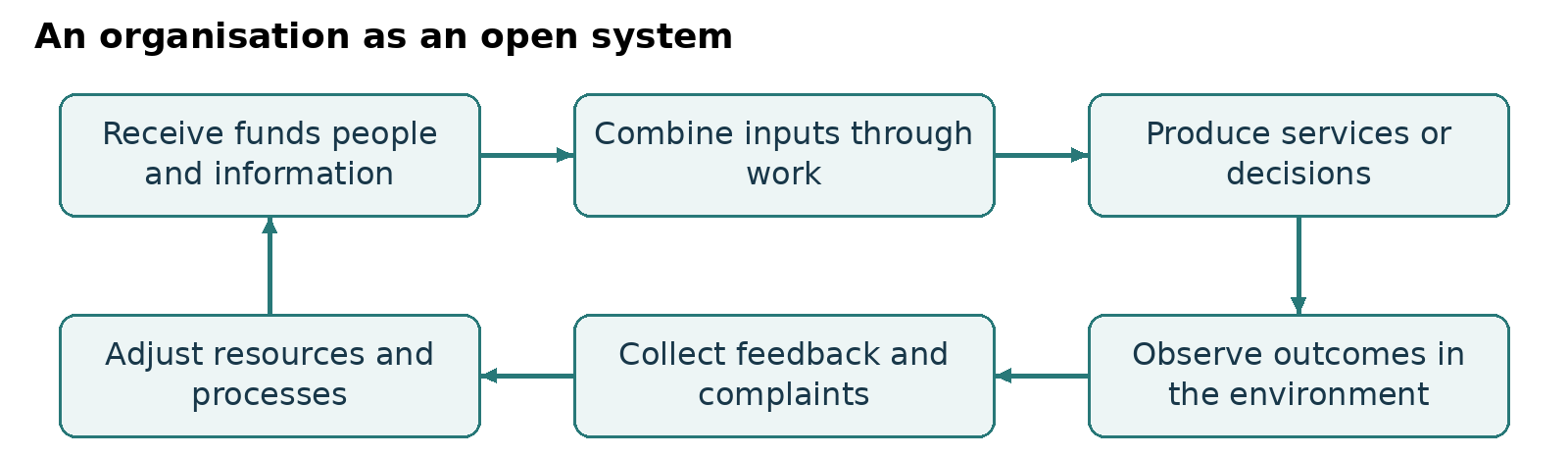
Figure 16 An organisation as an open system
Contingency theory examines that fit. Stable and repeatable work often benefits from defined roles and standardisation. Uncertain work that depends on changing information often requires lateral communication and flexible teams. Mechanistic and organic designs, associated with Burns and Stalker, describe these differing tendencies. An emergency operation can use standard safety protocols and flexible local coordination at the same time.
Differentiation and integration, associated with Lawrence and Lorsch, explain why units exposed to different environments develop different priorities and time horizons. A procurement office emphasises compliance and schedules. A disaster response team needs rapid delivery under uncertainty. A joint protocol can coordinate them by defining emergency authority, documentation and subsequent review. Integration addresses differences that specialisation makes necessary.
Organisation Development and Change
Organisation development is planned work to improve how an organisation functions, often through diagnosis, feedback, participation and learning. Structural change alters roles and authority. Technological change alters tools and processes. Behavioural change alters relationships, skills and expectations. A redesign often needs all three.
Resistance may arise from fear of job loss, unclear authority, loss of expertise or practical problems overlooked by the designers. Staff objections can reveal genuine implementation constraints. Diagnose the causes, involve the affected groups, test changes in a pilot and use evidence to decide what to retain. Assign a process owner and specify how legacy cases and exceptions will move through the new system.
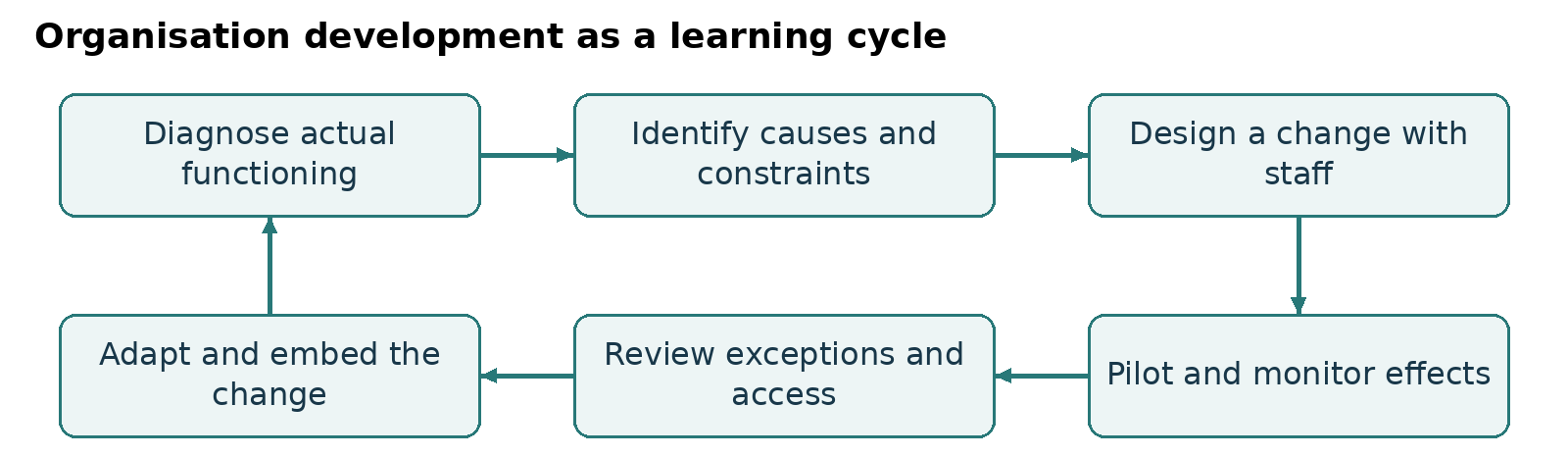
Figure 17 Organisation development as a learning cycle
A treasury integrates payment authorisation and bank-status reconciliation across two systems. A functional design can retain specialised teams for finance and technical operations. An integrated workflow needs a shared transaction identifier, agreed status definitions and a named owner for exceptions. Measure successful credit, unresolved mismatches and time to correction. Organisational effectiveness depends on the completed transaction rather than the speed of an individual desk.
Evaluating Organisational Change
Process redesign should start with a baseline. Record the current division of responsibilities, volumes, waiting, failure rates and remedy paths. Then specify the proposed change and which failure it should reduce. A pilot can expose unintended effects. For example, immediate validation may prevent rework but create exclusion if an authoritative register contains old data. A correction channel and transitional handling for existing cases are part of the design.
Effectiveness has several dimensions. An organisation may achieve its immediate output targets, secure resources for future work and still fall short of user expectations. Measure actual service completion and the capacity to sustain it. Track whether internal performance improved by moving work or risk elsewhere. This links open-system analysis to organisational change.
Explain how open systems and contingency theory improve the design of field administration.
Answer direction. Describe inputs, transformation, output and feedback. Identify how uncertainty, task variety and resources alter the required design. Use a district example to show where standardisation and flexible coordination should operate together.
Previous: Herbert Simon and Decision Making | Next: Mary Parker Follett and Dynamic Administration
📣 Join our community