Herbert Simon and Decision Making
Decision premises, bounded rationality, satisficing and the stages of decision.
Paper I Unit 2 Administrative Thought, Unit 3 Administrative Behaviour and Unit 10 Public Policy. Paper II Unit 4 Union Government and Administration, Unit 7 District Administration since Independence and Unit 8 Civil Services.
Decisions as the Core of Administration
Herbert Simon’s Administrative Behavior shifts attention from organisational principles to how decisions are made and influenced. An organisation divides decisions as well as tasks. Higher levels select broad objectives and constraints. Lower levels translate these into particular choices. Field information can reveal that an objective or procedure needs revision. The hierarchy of decisions therefore connects direction with learning.
Simon called many classical principles proverbs because they were paired with plausible opposing prescriptions. A narrow span of control can improve supervision, while a shorter chain can improve speed. Grouping by purpose can integrate a mission, while grouping by process can concentrate technical expertise. The scientific problem is to identify the conditions under which each arrangement performs better and the dimensions against which it is assessed.
Facts Values and Decision Premises
A fact premise is a claim about conditions or probable consequences that can be examined using evidence. A value premise expresses a preference about objectives or outcomes. A decision typically combines both. Choosing a mobile service to reach remote residents depends on a commitment to access and on factual estimates of travel, coverage and cost. Evidence can show which option better advances a specified end. Selecting among conflicting ends requires judgement and legitimate authority.
Means and ends form chains. A new verification system is a means to accurate payment. Accurate payment is a means to delivering benefits. Delivering benefits serves a broader objective such as income support. A measure can distort behaviour when a lower-level means becomes an end in itself. An organisation that maximises successful form submissions may still fail to make timely payments.
A decision premise is an input to judgement. Organisations shape premises through rules, training, routines, shared goals, records and information systems. Authority influences decisions by defining whose direction an official accepts within the relevant role. Advice supplies knowledge. Identification encourages officials to consider organisational objectives. These mechanisms explain how senior decisions influence execution without specifying every field action.
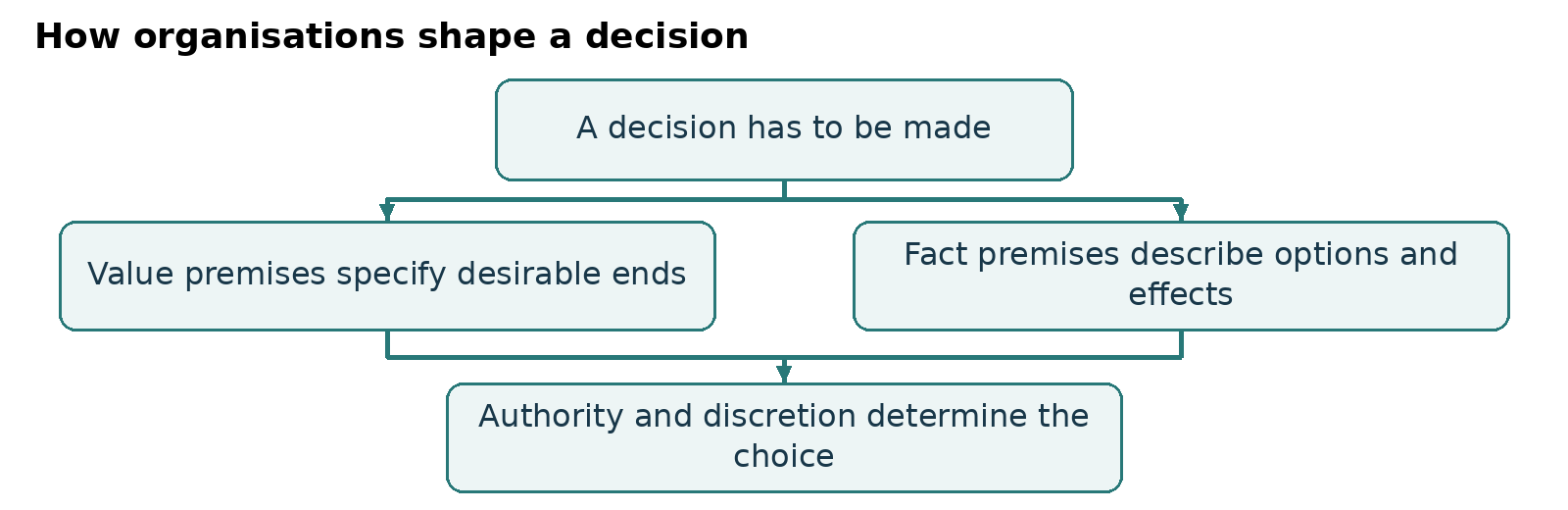
Figure 12 How organisations shape a decision
Bounded Rationality and Satisficing
Comprehensive rationality assumes a decision maker can identify relevant alternatives, estimate their consequences and choose the option that best advances the objective. Actual administrators face limits of time, information, attention and computational ability. Their preferences may be incomplete and the environment uncertain. They simplify the problem, search selectively and use thresholds to make a decision.
Satisficing means selecting an option that meets an acceptable standard under the circumstances. A district choosing a temporary shelter may search for a site that meets minimum safety, capacity and access requirements within the available time. The threshold represents an aspiration level. Experience can change the acceptable combination of cost, distance and capacity where discretion exists. When a suitable site is found, the value of more search must be weighed against delay. If no site meets the threshold, the district can extend the search, revise nonessential criteria or escalate the decision. Mandatory safety standards remain binding.
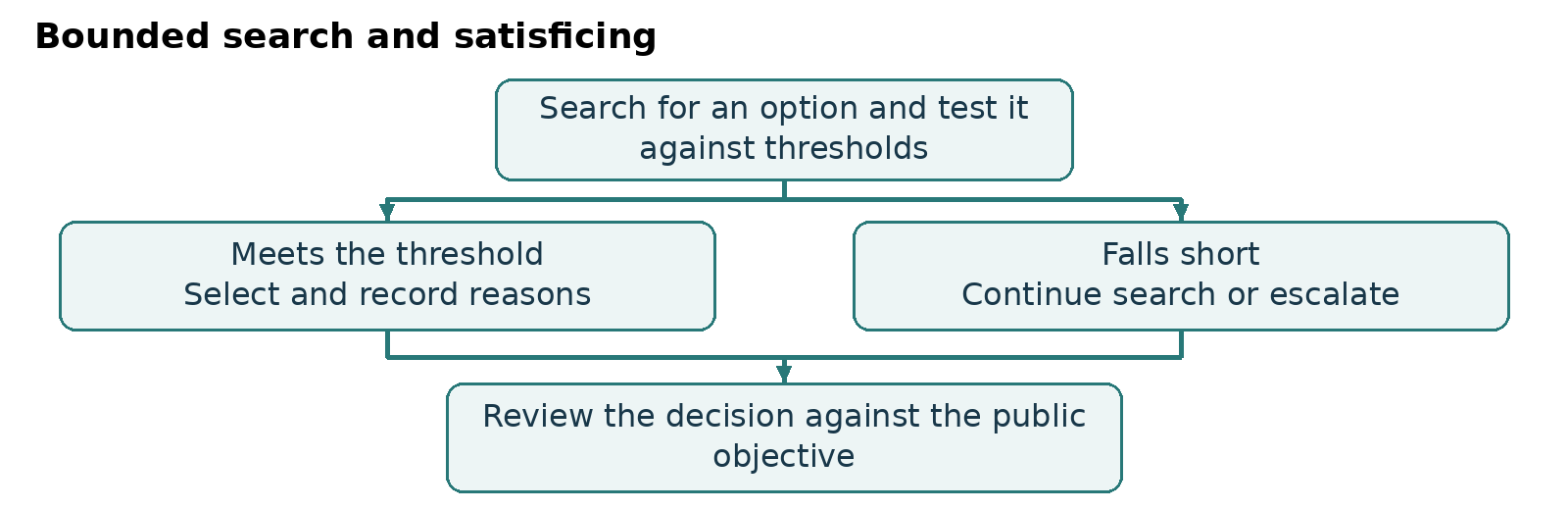
Figure 13 Bounded search and satisficing
| Dimension | Economic person as benchmark | Administrative person |
|---|---|---|
| Information | Relevant alternatives and consequences are available | Search is selective and information incomplete |
| Criterion | Optimises against the objective | Seeks a satisfactory alternative under constraints |
| Process | Compares the full feasible set | Uses procedures, routines and stopping rules |
| Practical implication | Supplies a benchmark | Explains actual behaviour and helps redesign search |
Programmed decisions recur and can be addressed by established procedures. Non-programmed decisions are novel, uncertain or consequential enough to require judgement and additional search. A routine bill check can be programmed. A systemwide mismatch after a technical failure needs diagnosis, coordination and a lawful recovery plan. Workflows often contain both. Good design routes atypical cases to an officer with the competence and authority to handle them.
Efficiency and Computing
Efficiency requires comparison of alternative means in relation to specified ends and resources. The choice of ends matters in public administration. A system that reduces time but excludes a vulnerable group may perform poorly against a public access objective. Simon’s separation of values and facts helps make the objective and the evidence visible.
Computers can improve retrieval, calculate consequences, apply repeatable rules and make alternative courses easier to compare. They can also narrow the set of options considered when records omit some groups or software encodes a poor proxy. Decision support should preserve the source of premises, the scope of automated authority and a route to review unusual cases. More computing can shift the limits of rationality while scarce attention and uncertain values remain.
An agency evaluates bids for a records system. Security, accessibility and interoperability form mandatory thresholds. Among qualifying offers, it compares life-cycle costs and implementation capacity. The committee records where its estimates are uncertain. If none qualify, it reviews specifications or retenders through the proper process. Bounded rationality explains the structured search. Procurement law and public values determine which shortcuts are permissible.
Intelligence Design and Choice
Simon’s intelligence activity identifies and defines a problem. Design develops and examines feasible courses of action. Choice selects a course using criteria and evidence. The activities can repeat. Discovering that a payment failure reflects a shared data mismatch can change the problem definition and make an earlier option irrelevant. Follow-up shows whether the decision solved the problem and provides feedback for later choices.
Authority, advice, training and identification alter the boundaries of search. An official trained to consider inclusion will look for access costs that a narrower brief may miss. Departmental identification can motivate public service and also cause officials to give too much weight to their unit’s objectives. Common outcome measures and cross-unit review can widen the relevant premises without requiring each officer to analyse every consequence alone.
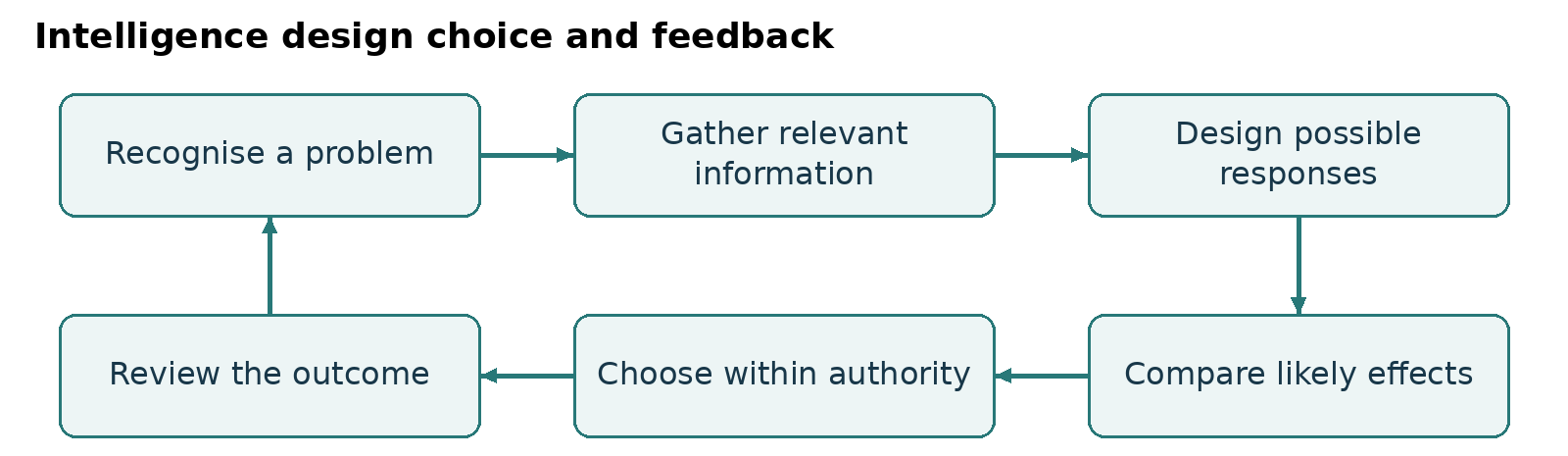
Figure 14 Intelligence design choice and feedback
How does Simon’s analysis of decision premises explain the relationship between authority and discretion?
Answer direction. Define factual and value premises, then explain hierarchy, training and rules as sources of influence. Show how frontline discretion remains when premises leave gaps. Apply the argument to a service exception and discuss recorded reasons and review.
Previous: Human Relations Approach | Next: Organisational Structure, Processes and Functioning
📣 Join our community