Mary Parker Follett and Dynamic Administration
Circular response, the law of the situation, constructive conflict and coordination.
Paper I Unit 2 Administrative Thought. Read Follett alongside conflict and coordination, Barnard alongside formal and informal organisation, and participative management alongside Paper I Unit 3 Administrative Behaviour. These topics connect to Paper II Unit 8 Civil Services and Unit 7 District Administration since Independence.
Follett views organisation as a continuing process of interaction. People and groups bring different knowledge, interests and experience to a shared situation. Their actions change the situation and each other’s responses. She describes this reciprocal process as circular response. A manager who issues an instruction alters the way staff communicate, and their response changes what the manager can know and do next. This helps explain why leadership and coordination cannot be fully understood from the formal chart.
The law of the situation directs parties to study the requirements of a shared task and allow the facts to inform the decision. A technical constraint can give an instruction its practical legitimacy. People may still interpret the facts differently. Public authorities also remain bound by law and must explain whose judgement is decisive when disagreement persists. Follett’s insight is that authority can be exercised through joint inquiry and relevant knowledge.
| Response to conflict | Mechanism | Illustrative outcome |
|---|---|---|
| Domination | One party imposes its preferred outcome | A superior grants an entire time slot to one team |
| Compromise | Each side gives up part of its stated demand | Both receive half the time even though neither can complete its task |
| Integration | Parties identify underlying interests and redesign the arrangement | A team needs daytime access while another needs equipment at night, allowing both needs to be met |
Integration requires a willingness to disclose interests, reliable information and room to design alternatives. When two teams need the same scarce resource simultaneously and rights or safety constrain the choice, a reasoned allocation may still be needed. Power with refers to capacity developed jointly through cooperation. Power over emphasises control of one party by another. Clear decision rights can coexist with jointly developed solutions.
Follett’s principles of coordination emphasise direct contact, early coordination, reciprocal relations and continuity. Consult affected units before a design hardens. Examine how each unit’s work changes the constraints faced by the others. Maintain coordination as circumstances change. In a district flood response, the transport and health teams should design routes together because evacuation capacity and clinical needs jointly determine the plan.
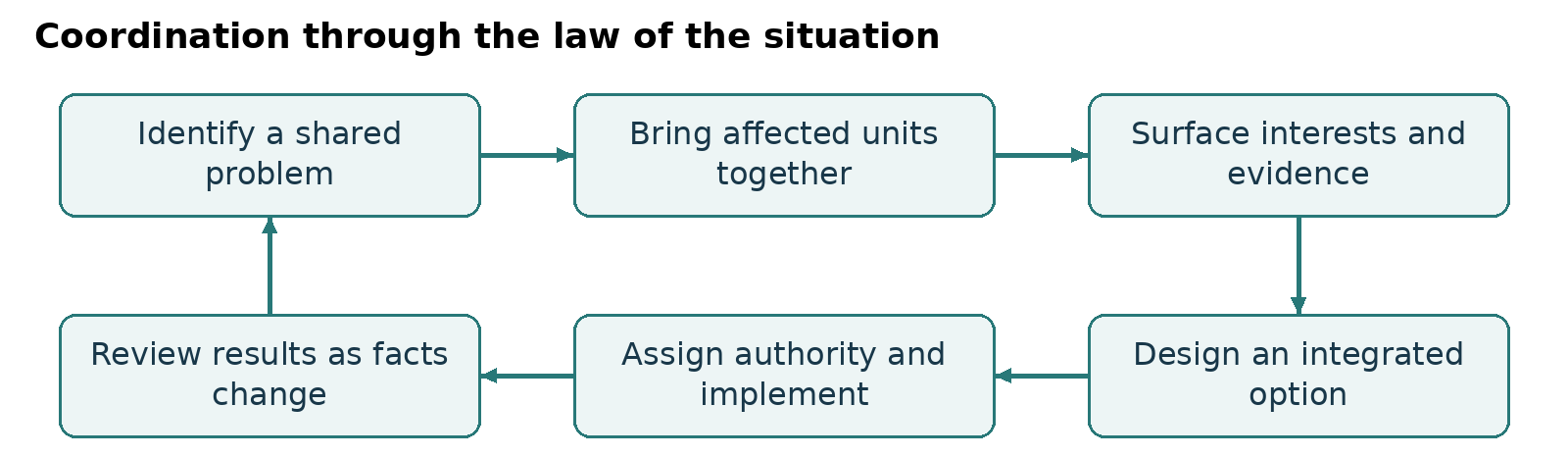
Figure 18 Coordination through the law of the situation
Taylor primarily studies task design and productivity. Follett studies interaction, authority and joint problem solving. Her socio-psychological contribution lies in explaining how group processes produce the conditions for effective coordination, even when formal responsibilities are already defined.
Previous: Organisational Structure, Processes and Functioning | Next: Chester Barnard and the Functions of the Executive
📣 Join our community