Max Weber and Bureaucracy
Legitimacy, the ideal type, features of the bureaucratic office, and Weber applied in India.
Paper I Unit 2 Administrative Thought and Unit 4 Organisations. Paper II Unit 1 Evolution of Indian Administration, Unit 8 Civil Services and Unit 10 Administrative Reforms since Independence.
Legitimacy and the Ideal Type
Max Weber studied bureaucracy as part of a wider inquiry into authority and rationalisation. Power is the ability to carry out one’s will despite resistance. Legitimate domination involves a recognised claim to issue commands and an expectation of compliance. Weber’s types classify the grounds on which people accept that claim. Real organisations can combine several grounds.
| Type | Ground of legitimacy | Administrative tendency |
|---|---|---|
| Traditional | Belief in established custom and inherited authority | Offices may depend on status, personal loyalty or inherited relations |
| Charismatic | Devotion to the perceived exceptional qualities of a leader | Mobilisation can be intense and succession uncertain |
| Legal-rational | Belief in valid rules and the authority of offices constituted under them | Jurisdiction, impersonal procedures and qualified officials |
Charisma can become routinised when a movement needs succession, stable resources and continuing administration. A leader’s personal following can be transformed into institutional rules or succession arrangements. This helps explain why an organisation born from personal authority may later adopt bureaucratic procedures.
An ideal type is a deliberately accentuated analytical model. It helps compare real cases by specifying features clearly. An office can display merit recruitment and written rules while actual behaviour is affected by patronage or informal norms. Such differences are material for explanation.
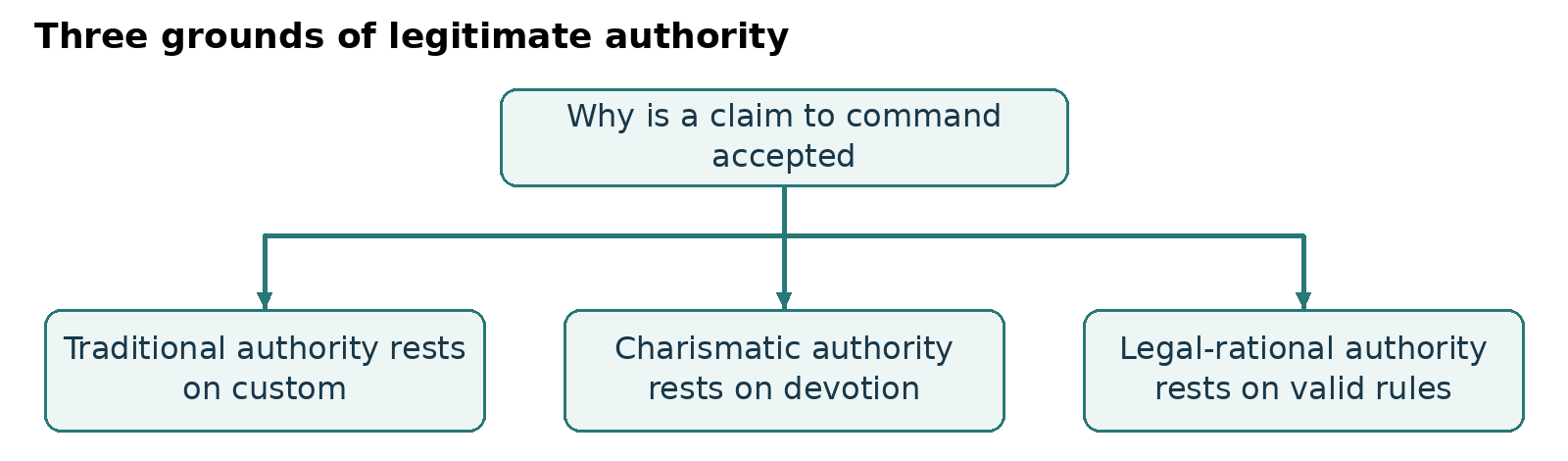
Figure 8 Three grounds of legitimate authority
Features of the Bureaucratic Office
| Feature | Mechanism | Public value |
|---|---|---|
| Fixed jurisdiction | Duties and powers attach to an office | People can identify who may act |
| Hierarchy | Lower offices work within a chain of supervision and review | Decisions can be corrected or escalated |
| Written records | Decisions and evidence survive changes of personnel | Continuity and auditability |
| General rules | Similar cases can be judged against published criteria | Predictability and equal treatment |
| Technical qualifications | Selection and work depend on trained competence | Professional performance |
| Separation of office and private property | Staff do not own public funds, files or powers | Protection against personal appropriation |
| Career service | Offices support professional continuity, with remuneration and discipline | Institutional memory and professional independence |
The individual officer is personally free within the legal order and subject to official duties through the role. Appointment and advancement are associated with qualifications and career arrangements. The office belongs to the organisation, and its instruments are held for public purposes. These distinctions help explain why modern bureaucracy can process many cases predictably after individual officers leave.
Technical superiority rests on continuity, precision, specialised knowledge and records. It has a political cost. Officials who control expertise and information can gain practical influence over elected leaders. Secrecy can make scrutiny difficult. Rules also constrain citizens whose circumstances fall outside categories. Weber’s account therefore illuminates both administrative capacity and the concentration of organisational power.
Applying Weber in India
A public payment illustrates the institutional logic. Jurisdiction determines who sanctions and authorises. Records show the reason, classification and amount. Audit traces the transaction across officers and periods. Impersonality protects similarly situated claimants from differences based on personal connections. A digital workflow can reinforce this model by recording actions, but it can also conceal the basis for rejection if automated rules are inaccessible.
Bureaucratic power can be checked by legislative scrutiny, political direction within law, judicial review, audit and access to information. Each check requires useful records and the ability to obtain correction. Administrative independence is valuable when it protects professional judgement. Review is necessary when authority is exercised arbitrarily or contrary to mandate.
Bureaucracy Across Different Political Settings
Bureaucratic machinery can serve governments with different political purposes. Technical competence and continuous records explain how orders are implemented. Political institutions determine which orders are authorised and how people can challenge them. Distinguishing the machinery from its purposes helps explain the inheritance of administrative forms after political change.
Legal-rational authority also differs from confidence in a particular incumbent. Citizens can trust an official personally, but the validity of the decision rests on the office, jurisdiction and legal procedure. A reasoned order with a review route protects continuity when the official changes. A decision that rests on personal assurances is harder to verify and may be difficult to enforce. Weber’s concern with rationalisation invites analysis of what happens as more domains come to be governed by calculable standards.
Weberian bureaucracy creates the conditions for both accountability and bureaucratic power. Explain.
Answer direction. Link legal-rational legitimacy to jurisdiction, expertise and files. Explain how the same expertise and information create asymmetry. Discuss institutional oversight and the conditions under which rules support access and fairness.
Previous: Administrative Management | Next: Critique of Bureaucracy
📣 Join our community