Critique of Bureaucracy
Merton, Selznick, Gouldner, Blau and the Marxian critique, used as diagnoses.
Paper I Unit 2 Administrative Thought, Unit 4 Organisations and Unit 5 Accountability and Control. Paper II Unit 8 Civil Services and Unit 14 Significant Issues in Indian Administration.
Three Questions Behind the Critiques
Critics ask how bureaucracy affects democratic power, how it functions in practice and how it relates to class and the state. These are distinct lines of argument. An organisation can be internally efficient and still concentrate political power. It can have a formally neutral mandate and systematically favour people better able to navigate its rules.
John Stuart Mill feared that the concentration of experience and decision power in official hands could weaken initiative outside the bureaucracy. Representative institutions and local participation help preserve public capacity to scrutinise and act. Gaetano Mosca explained the power of organised minorities over less organised majorities. Robert Michels studied how the organisational needs of mass parties could concentrate control in leaders. Leadership controls meetings, records, communication and expertise. Members often lack the time and information to challenge them. This is the mechanism behind his iron law of oligarchy. The claim helps identify pressures towards concentration even in organisations committed to democracy.
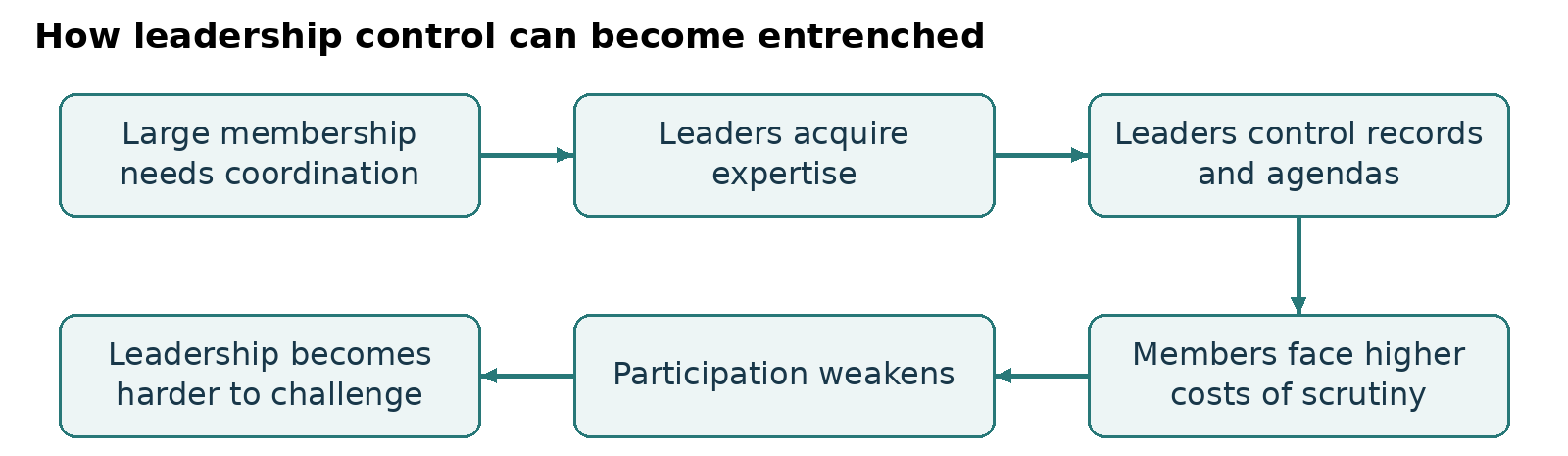
Figure 9 How leadership control can become entrenched
From Formal Rules to Actual Behaviour
| Thinker | Critique or finding | Mechanism and illustration |
|---|---|---|
| Robert K Merton | Goal displacement and trained incapacity | Repeated compliance makes rules ends in themselves. A welfare desk protects file completeness while eligible applications wait |
| Philip Selznick | Co-optation and organisational adaptation | Incorporating external interests can secure cooperation while changing priorities. A board relies on dominant local partners and gives their concerns more weight |
| Alvin Gouldner | Rules operate differently according to agreement and enforcement | Shared rules can support cooperation. Imposed rules can trigger resistance. Unenforced rules can become ceremonial |
| Peter Blau | Informal practices can improve real performance | Peer consultation may solve cases faster than an exclusively vertical channel |
| Talcott Parsons | Expertise and hierarchy can pull in different directions | A qualified specialist may understand a technical risk better than the superior empowered to decide |
| Michel Crozier | Bureaucratic vicious circle | Centralisation and impersonal rules leave unresolved uncertainties. Those controlling exceptions gain informal power, encouraging demands for further rules |
Merton’s argument begins with a functional requirement. Bureaucracy needs reliable conduct. Training and discipline encourage officials to follow rules consistently. The same habits can become maladaptive in unusual circumstances. A response that adds further rules may reinforce the original problem. An exception channel, written reasons and review can retain predictability while making judgement possible.
Gouldner’s patterns illustrate different social meanings of rules. In mock bureaucracy, formal rules are known but routinely ignored by those concerned. In representative bureaucracy, rules command substantial acceptance. In punishment-centred bureaucracy, rules are imposed and enforcement becomes a site of conflict. The categories show why additional enforcement can increase conflict when workers and managers disagree about the purpose or legitimacy of a rule.
Selznick’s co-optation concerns absorbing actors or groups into decision structures to manage threats to stability or legitimacy. It can broaden cooperation. It can also shift the organisation’s goals when powerful participants gain a durable say over decisions. Blau’s work offers a complementary insight. Informal relations can make an organisation more effective when formal arrangements fail to transmit practical information. Whether informality helps depends on who benefits and whether decisions remain reviewable.
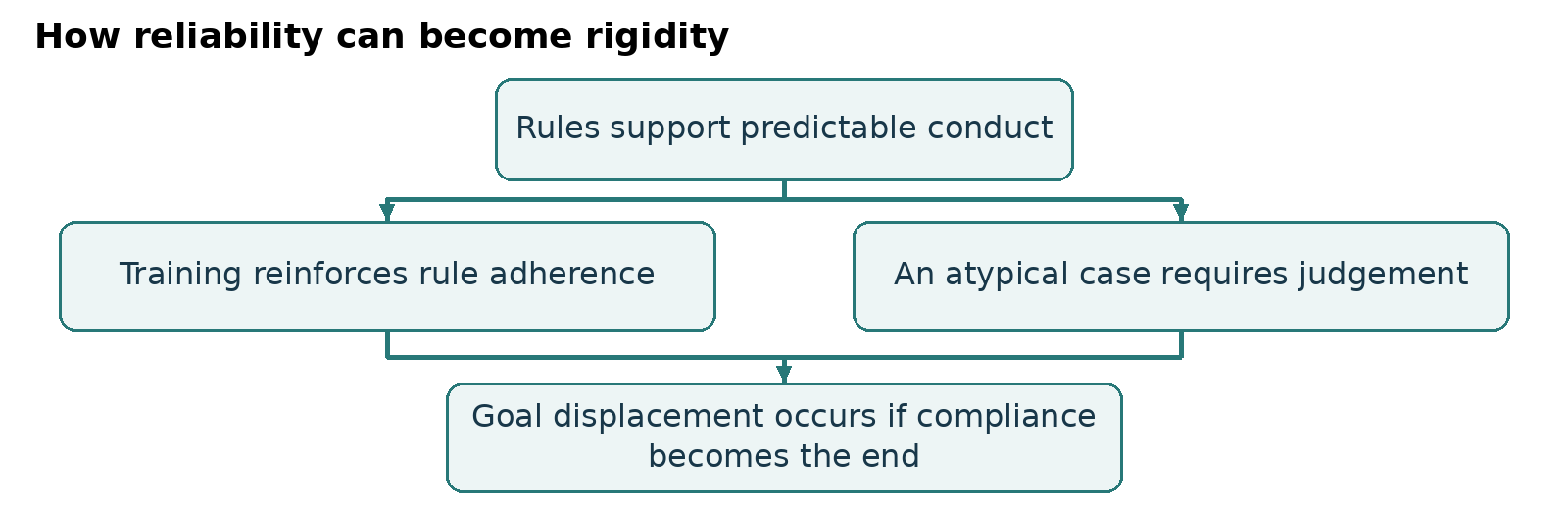
Figure 10 How reliability can become rigidity
The Marxian Critique
Marx examined bureaucracy in relation to the separation between the state and civil society and the structure of class society. Officials can present particular administrative interests as the universal interest. Hierarchy, secrecy and exclusive control over knowledge can detach official activity from the people it governs. A Marxian explanation asks how public authority relates to property and class power. This differs from Weber’s question about the legitimacy and technical organisation of authority.
Lenin’s revolutionary approach raised the problem of dismantling the old state machinery and bringing administration under popular control. Measures such as recall and limits on officials’ privileges were intended to reduce separation from the public. The growth of centralised party and state administration under Stalin illustrates the tension between revolutionary claims and the organisational demands of concentrated power. Separate the historical record from the normative commitments of revolutionary theory.
| Question | Weberian lens | Marxian lens | Post-Weberian organisational lens |
|---|---|---|---|
| Core concern | Legitimate authority and administration through office | State power, class and separation from society | Actual consequences of rules and organisational adaptation |
| Evidence | Jurisdiction, recruitment, files and hierarchy | Property relations, distribution and whose interests prevail | Exceptions, informal networks, compliance and operating goals |
| Applied issue | Who may decide a benefit claim | Which groups shape eligibility and bear the burden of proof | How staff routines affect actual access |
A digital grievance office improves its closure rate but receives more repeat complaints. Merton’s lens tests whether closure displaced correction as the practical goal. Crozier’s lens tests whether frontline staff refer every exception upward and specialist operators control access. A democratic lens tests whether users can challenge closure. Each diagnosis implies a different remedy.
Using Critiques as Diagnoses
Suppose a public board repeatedly allocates resources to groups already represented on it. A Selznick analysis asks whether securing cooperation has changed the board’s operating priorities. A Michels analysis asks whether officeholders control information and participation. A Marxian analysis asks how patterns of ownership and social power shape the distribution. The same outcome can fit several explanations. Evidence about appointments, meeting agendas and actual allocations can help distinguish them.
The remedies also differ. Publishing minutes may address information control. Changing representation may address capture. A review of eligibility and allocation may address structural exclusion. Specific reforms become easier to defend when they respond to the mechanism actually at work.
How do post-Weberian studies qualify the claim that formalisation increases efficiency?
Answer direction. Explain why rules support predictability. Compare Merton, Gouldner and Blau to show how enforcement, internalisation and informal cooperation change outcomes. Apply the argument to a rule-bound service and identify reviewable flexibility.
Previous: Max Weber and Bureaucracy | Next: Human Relations Approach
📣 Join our community