Human Relations Approach
The Hawthorne research programme, the work group, morale and supervision.
Paper I Unit 2 Administrative Thought and Unit 3 Administrative Behaviour. Paper II Unit 8 Civil Services and Unit 10 Administrative Reforms since Independence.
From the Individual Task to the Work Group
The Human Relations approach widened the study of performance from physical conditions and individual incentives to supervision, group norms, belonging and informal communication. Elton Mayo became closely associated with interpretations of the Hawthorne research. The studies involved Western Electric staff and several researchers. Contributions by Fritz Roethlisberger and William Dickson are important in explaining how the work group became a unit of analysis.
Mayo’s early industrial investigations examined problems such as labour turnover, fatigue and work conditions in a textile setting. Rest periods and attention to working conditions were among the responses. An intervention could change physical fatigue, workers’ sense of control and relations with supervisors together. This makes it difficult to isolate one cause without a suitable research design.
The Hawthorne Research Programme
| Study | What researchers examined | Main analytical lesson |
|---|---|---|
| Illumination studies | Relation between lighting and output | Productivity changes could not be explained by lighting alone |
| Relay assembly test room | Output under changes in breaks, hours, incentives and close observation | Several conditions changed together. Supervision and group relations became plausible explanations |
| Interviewing programme | Employee attitudes, complaints and experiences | Grievances can reveal wider relationships and meanings beyond their immediate wording |
| Bank wiring observation room | Informal behaviour in an established work group | Workers can enforce a group output norm that limits the effect of individual incentives |
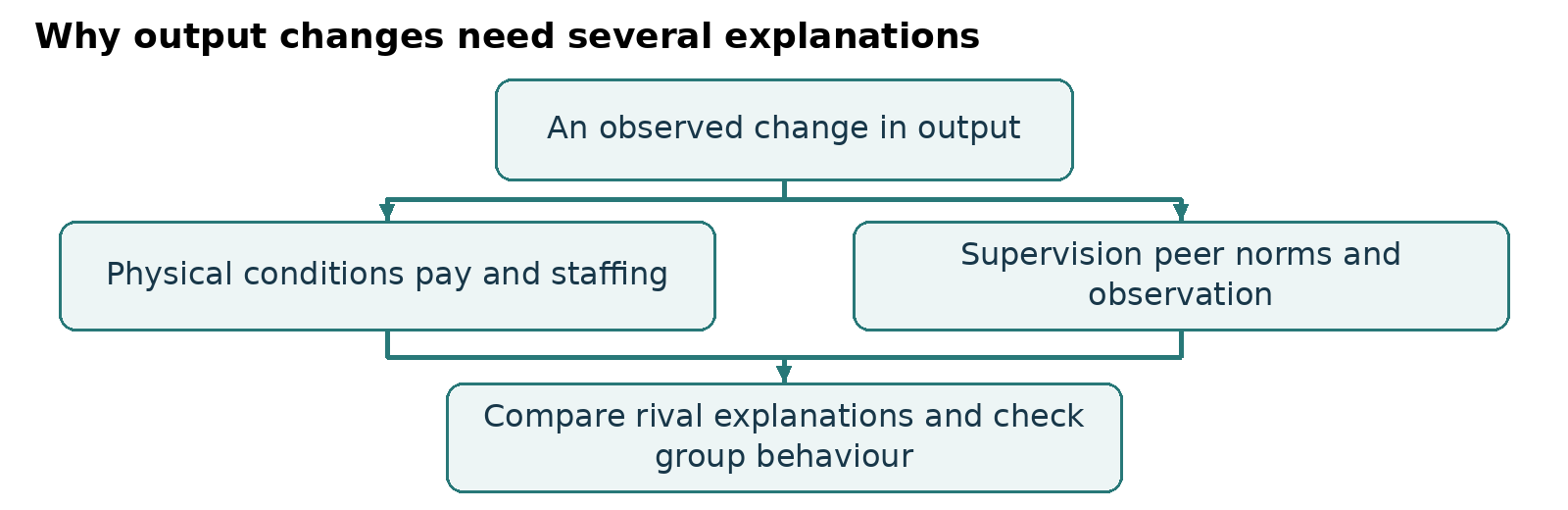
Figure 11 Why output changes need several explanations
In the bank wiring room, group members had reasons to resist production above a socially accepted level. Higher output could invite tighter standards, disadvantage slower workers or threaten cohesion. Peer approval and disapproval helped sustain the norm. This observation is especially useful because it shows why informal organisation can restrain as well as support managerial objectives.
The popular Hawthorne effect refers to behaviour changing when people are observed or receive attention. The original studies involved changing pay, supervision, staffing, working conditions and group composition. Their results support attention to social context, while precise causal claims about observation alone require stronger evidence.
Absenteeism Morale and Supervision
Absenteeism can reflect illness, fatigue, travel, care responsibilities, conflict at work or low trust. An increase in absence should trigger investigation of patterns and conditions. A department can compare shifts, workloads and changes in supervision, then hear staff and test a targeted response. Discipline may address deliberate misconduct. Safe transport, predictable shifts or improved working conditions may address a different cause.
Morale concerns the group’s willingness and confidence to pursue common work. Job satisfaction concerns how individuals evaluate their work. Motivation concerns the processes directing effort. These concepts can move together and also diverge. A highly cohesive group may maintain strong morale while resisting a target it considers unfair. Performance depends on how group norms align with the task and on the resources available.
| Classical emphasis | Human Relations emphasis | Combined implication |
|---|---|---|
| Method and formal task design | Social meaning and group behaviour | Test work methods with those who use them |
| Formal supervision | Communication and supportive leadership | Preserve responsibility and make upward feedback credible |
| Individual output and incentives | Peer norms and informal sanctions | Check whether rewards alter group behaviour |
| Formal chart | Informal organisation | Diagnose both authority and information flows |
Appraisal and Application
The approach made informal organisation, leadership and employee experience central to administration. It can become paternalistic if managers invite workers to speak while retaining every meaningful decision. It can also underplay conflict over wages, workload, status and power. Participation should be assessed through the decisions staff can influence and the organisation’s response to their evidence.
A district office introduces individual speed targets. Experienced staff stop helping new recruits because coaching reduces their measured output. A Human Relations analysis identifies a change in group incentives and trust. Restoring peer support requires time for training, recognition of mentoring and quality measures at team level. Better communication helps when it is accompanied by changes in work design.
Designing an Organisational Inquiry
Imagine that a supervisor observes higher output after introducing team meetings. Several changes might account for it. The meetings may have solved coordination problems, improved morale or coincided with a lighter caseload. Track case mix and error rates, compare shifts with similar workloads and ask staff what changed in daily routines. This keeps the Human Relations emphasis on experience while addressing weak causal inference.
Staff participation also raises a question of power. A suggestion scheme allows employees to supply information. Joint diagnosis or authority to test solutions gives them greater influence over work. If feedback can affect appraisal or expose staff to retaliation, they may withhold it. A credible supervisor makes the purpose and use of feedback clear and follows through on problems staff identify.
What does the bank wiring study contribute to the analysis of formal and informal organisation?
Answer direction. Explain how the formal incentive system interacted with informal output norms. Compare this finding with the relay assembly interpretation. Apply the mechanism to a public office and discuss the limits of generalising from the studies.
Previous: Critique of Bureaucracy | Next: Herbert Simon and Decision Making
📣 Join our community