Civil Society Organisations
The roles, strengths and accountability problems of civil society organisations.
Paper I Unit 5 Accountability and Control and Unit 8 Development Dynamics. Paper II Unit 11 Rural Development, Unit 12 Urban Local Government and Unit 14 Significant Issues in Indian Administration.
Civil Society as a Sphere of Association
Civil society is the sphere in which people organise collectively around shared interests, identities, causes and public concerns. It includes unions, voluntary associations, community groups, social movements, professional bodies and nonprofit organisations. An NGO is one organisational form within civil society. Informal networks and movements can influence policy even when they lack a permanent office or formal membership.
The boundary with the state and market is permeable. An association can receive public funding and still retain an independent membership and voice. A service organisation can earn revenue while pursuing a social objective. Independence is best assessed by examining who sets priorities, controls resources and can challenge decisions.
| Thinker or approach | Main emphasis | Administrative implication |
|---|---|---|
| Tocqueville | Associations build habits of cooperation and check concentrated authority | Local organisations can develop civic capacity |
| Hegel | Civil society is a domain of particular interests and interdependence between family and state | Associational life needs institutions to mediate conflicts and insecurity |
| Gramsci | Civil society is a site where consent and hegemony are organised and contested | Associations can sustain power as well as challenge it |
| Habermas | Public discussion can bring private concerns into public reasoning | Access to forums and the quality of deliberation matter |
| Putnam | Networks, trust and norms can facilitate cooperation | Examine who participates in networks and who remains outside |
| Chandhoke | Civil society’s democratic character depends on politics, inclusion and the state’s institutional framework | Organised voice needs scrutiny for representativeness and power |
Social capital describes resources available through relationships and shared expectations. Bonding ties connect people within a group. Bridging ties connect different groups. Strong internal solidarity can support collective action while excluding outsiders. Administrative partnerships benefit from both local trust and links across communities and levels of authority.
What Civil Society Does in Governance
Civic organisations can identify neglected problems, translate local experience into policy evidence, assist service delivery, monitor implementation and provide channels for collective bargaining. A disability rights group may identify inaccessible application steps. A community association may help households obtain documents. A watchdog may examine whether public spending produced the promised service. These functions require different relationships with government.
Partnership can expand reach and bring local knowledge into programme design. Advocacy requires freedom to criticise. A group that depends on one contract may hesitate to challenge its funder. Governments can reduce this conflict by separating contractual monitoring from wider public consultation, protecting lawful criticism and allowing several channels of participation.
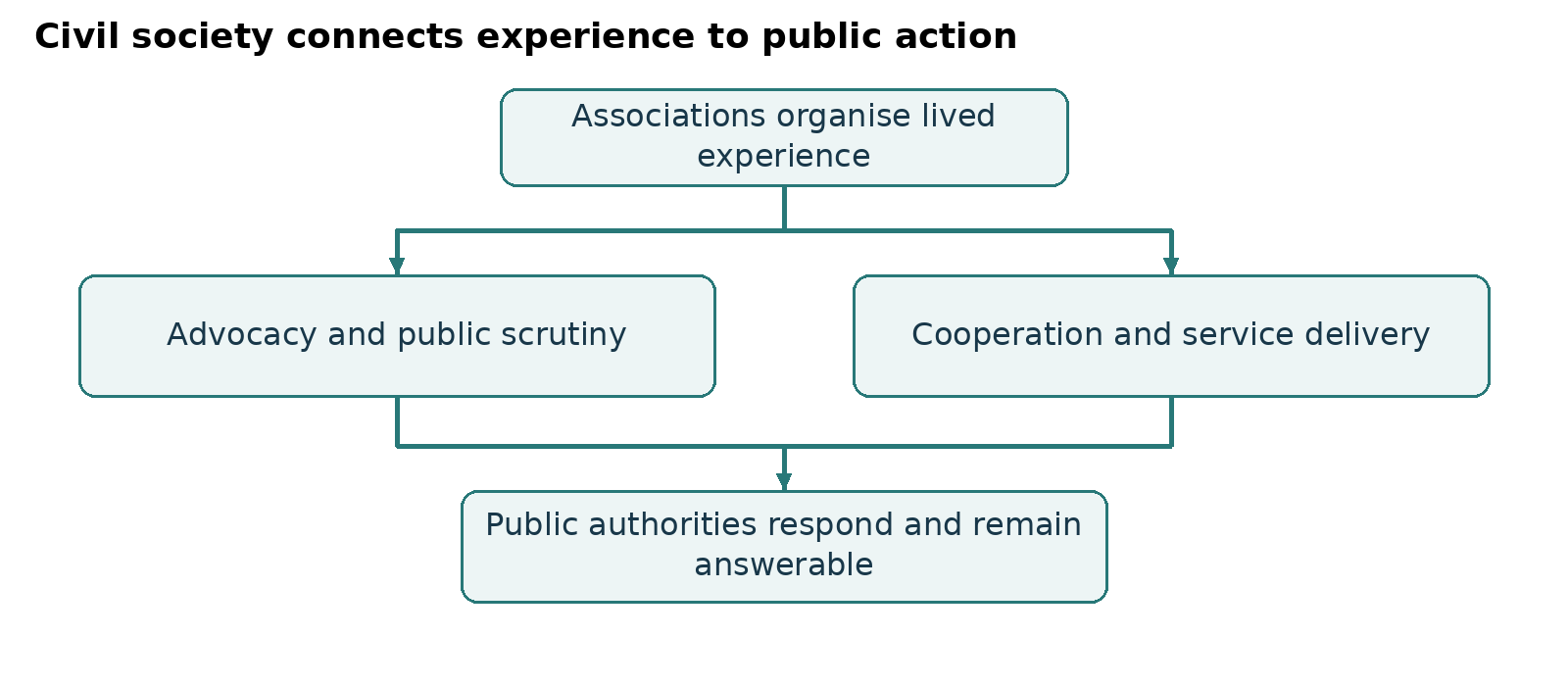
Figure 14 Civil society connects experience to public action
Representation and Accountability
| Function | Source of legitimacy | Main risk | Safeguard |
|---|---|---|---|
| Advocacy | Membership, lived experience or credible evidence | Claiming to speak for groups without their participation | Record constituencies and invite independent voices |
| Service delivery | Competence, agreed duties and verified results | Selective coverage and weak continuity | Publish obligations, funding and remedy routes |
| Public monitoring | Access to records and independent verification | Pressure from funders or local elites | Open methods, protected participation and follow-up |
| Co-production | Shared work and local knowledge | Shifting costs and unpaid labour to communities | Match responsibilities with resources and authority |
| Deliberation | Fair participation and public reasoning | Dominance by well-organised groups | Accessible information, facilitation and reasons |
Associations do not automatically represent everyone affected. Larger organisations can have better access to officials than loosely organised residents. A resident welfare association may know the needs of property owners while tenants, street vendors and informal workers remain unheard. Public authorities should ask how representatives were selected and whose experience is absent. An open invitation alone may leave structural barriers intact.
Civil society also faces internal accountability questions. Financial reporting, clear decision rules, conflict-of-interest disclosure and accessible complaint procedures help build trust. Government oversight can protect public funds and service users. Oversight should use clear lawful criteria and proportionate procedures, because excessive dependence or arbitrary control can weaken civic independence.
Indian Applications
The right-to-information campaign illustrates how grassroots claims can move from individual grievances to collective demands for institutional change. Public verification of records helps connect transparency with responsibility. Social audits extend this logic by comparing official records with people’s experience and tracking action on findings. Their impact depends on disclosure, safe participation and an authority capable of correction.
Self-help groups illustrate another pathway. Regular savings and group meetings can build confidence, knowledge and collective bargaining capacity. Linking groups to services and markets can expand opportunities. The benefits depend on who controls funds and decisions. Group membership and loan volume describe reach. Decision-making power and livelihood outcomes show how far participation changes people’s position.
Civil society can bring community knowledge into local planning without absorbing the duties of elected local bodies. A municipality can use community reports to identify irregular waste collection. It still needs to finance the service, enforce provider obligations and hear residents beyond the participating groups. Clear institutional roles protect both civic autonomy and democratic accountability.
Three Relationships with the State
An organisation can cooperate, contest or supplement. Cooperation occurs when public agencies and associations jointly solve a problem. Contestation occurs when an association challenges a decision, neglect or exclusion. Supplementation occurs when civic organisations fill gaps in delivery or knowledge. The same group may cooperate on one issue and contest another.
The public authority should preserve this range of relationships. A service partnership should have defined obligations and independent channels for criticism. Consultation should provide meaningful opportunities to affected people outside the contracted organisation. The durability of civic action depends on whether it builds independent capacity and whether state institutions remain able to act on evidence.
Under what conditions does civil society strengthen democratic administration?
Answer direction. Distinguish associations, movements and delivery organisations. Use Tocqueville or Putnam to explain cooperation and Gramsci to examine power. Apply the argument to a social audit or local service partnership. Assess representation, independence and the route to corrective action.
Does social capital always improve governance?
Answer direction. Define bonding and bridging ties. Explain cooperation and exclusion using one local example. Assess whether public institutions provide fair access across groups.
Previous: Good Governance | Next: Conflict Resolution
📣 Join our community