Changing Nature of the Indian State
Scope, capacity and autonomy of the state, and how liberalisation reshaped its role.
Paper II Unit 1 Evolution of Indian Administration, Unit 2 Philosophical and Constitutional Framework of Government and Unit 5 Plans and Priorities. Paper I Unit 1 Introduction and Unit 8 Development Dynamics supply the debates on liberalisation, development and state capacity.
State Government and Administration
The state is the enduring framework of public authority over a territory and population. The government consists of the officeholders and institutions that exercise public power at a particular time. Administration supplies the organisation, personnel and processes through which public decisions become enforceable and services reach people. A government can change through an election while the constitutional state and its administrative machinery continue.
A state's strength depends on what it can do lawfully and reliably. Scope concerns how many tasks the state undertakes. Capacity concerns whether it can carry them out. Autonomy concerns the room to act despite pressures from particular interests. Legitimacy concerns the public acceptance of its authority. These dimensions can diverge. A government can own many enterprises and lack the capacity to regulate pollution or enforce contracts. A government can sell enterprises and simultaneously expand its supervisory responsibilities.
The liberal tradition stresses legal restraint and the protection of liberty. A welfare approach also asks whether people possess the material conditions needed to exercise liberty. A developmental approach gives public institutions a role in building infrastructure, directing investment and addressing coordination failures. A political economy approach asks whose interests shape those choices and who pays for them. These are analytical perspectives. A single policy can serve several purposes and produce competing effects.
Colonial Inheritance and Constitutional Change
Colonial administration developed district hierarchies, official records, revenue systems and professional services. It concentrated authority around revenue, order and imperial priorities. Independent India retained parts of this machinery because a large and diverse country needed continuity and coordination. Its constitutional purpose changed through universal adult suffrage, representative government, fundamental rights, judicial review and commitments to social and economic justice.
Colonial continuity is most useful when stated at the level of an institution. A district office may retain a hierarchical chain of command while exercising development, election and relief responsibilities under democratic authority. The tension arises when inherited habits of secrecy and control persist despite a mandate to explain decisions and serve citizens. Continuity in organisation and change in legitimacy therefore coexist.
The Constituent Assembly faced demands for political integration, economic reconstruction and safeguards for diversity. The Constitution created a federation with a strong Union, divided legislative authority and provided mechanisms for intergovernmental coordination. Directive Principles guide the pursuit of welfare and social justice. Fundamental rights supply enforceable restraints on public authority. A strong Union and meaningful state or local authority answer different problems. National redistribution requires scale. Adaptation and public scrutiny often require decisions closer to the affected population.
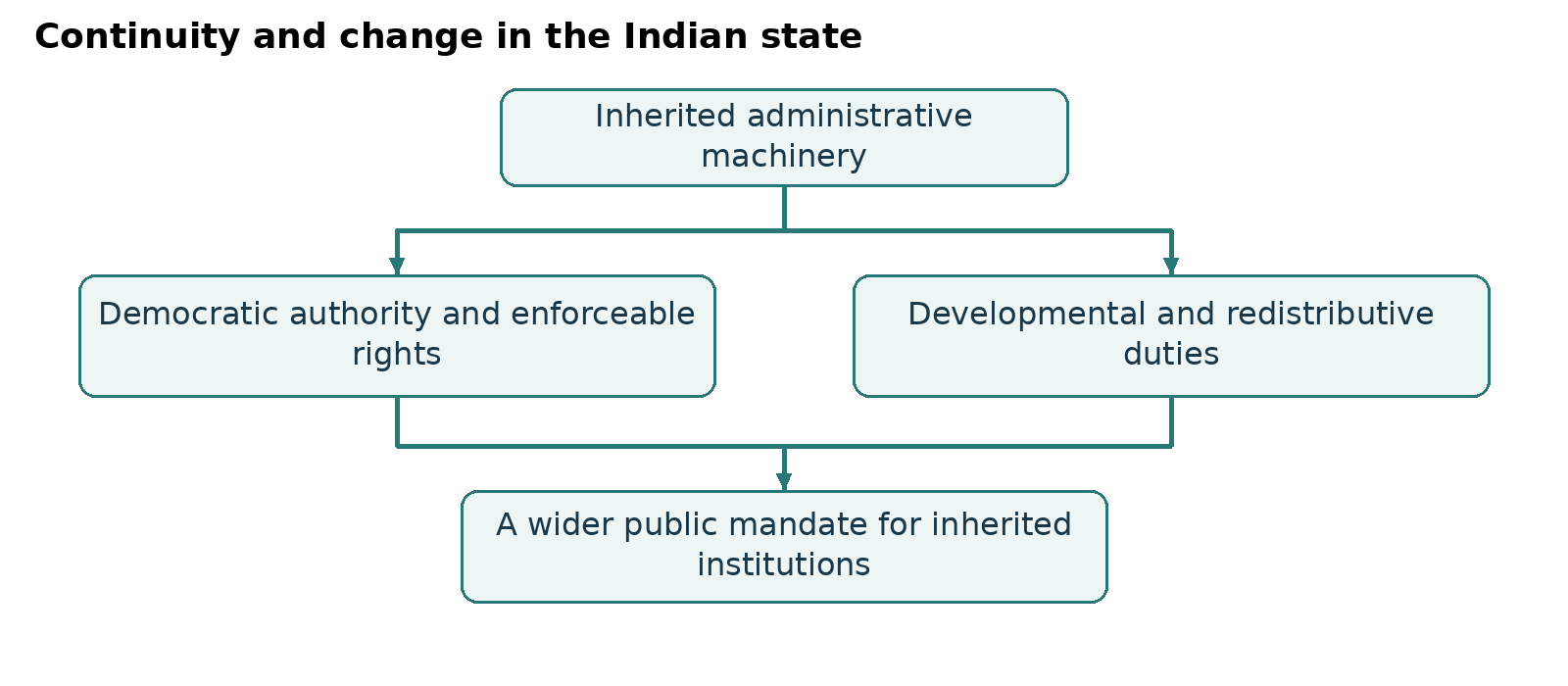
Figure 1 Continuity and change in the Indian state
From Planning to Regulation and Partnership
| Phase | Public role | Administrative question |
|---|---|---|
| Colonial administration | Revenue, order and imperial coordination | Who authorises the exercise of coercion and for whose purposes |
| Early constitutional and planning era | Nation building, development planning, public enterprise and welfare | Can central direction mobilise capital and sustain democratic accountability |
| Liberalisation after 1991 | Wider market entry, selective disinvestment and regulatory adaptation | Can public institutions govern competition and protect users |
| Contemporary mixed arrangements | Public provision alongside regulation, contracting, rights and digital delivery | Who retains responsibility when several institutions share delivery |
The post-independence developmental state used planning and public investment to build industrial and infrastructural capacity. Public enterprises were instruments for strategic production and long-horizon investment. The approach made sense where private investment was scarce and coordination difficult. It also raised problems of licensing discretion, information bottlenecks and weak incentives to improve services. Results differed across sectors and regions.
The 1991 reforms altered industrial licensing and the conditions of trade and investment. Liberalisation widened the role of markets. Privatisation concerns ownership or control. Disinvestment concerns sale of government equity and need not transfer control. Regulation sets and enforces the conditions under which public or private providers operate. The choice among these instruments depends on the sector. Transferring a monopoly to private ownership can leave users with the same limited choice under a different owner.
The regulatory role is demanding. It requires information about costs and quality, competent enforcement and safeguards against capture. A public authority that contracts out service delivery still needs to specify obligations, monitor performance and provide a remedy for exclusion. Rights and welfare responsibilities may expand alongside market participation. This explains why withdrawal from direct production can coincide with more complex public administration.
Federalism and State Capacity in Practice
Consider urban water services. A municipality can own assets, a utility can operate them, contractors can maintain networks and a state department can finance upgrades. Water quality and affordable access remain public concerns. If the distribution of responsibility is unclear, each institution can attribute failure to another. A credible arrangement assigns an owner to each function, secures funds for maintenance and tells users where to seek correction.
Fiscal capacity shapes practical autonomy. A local body with assigned functions but insufficient revenue or staff cannot exercise meaningful discretion. Conditional grants can support minimum standards and redistribution, while excessive conditions can prevent adaptation. Institutional design therefore involves aligning functions, funds, personnel and reporting with the scale of the problem.
A strong state in the democratic sense combines implementation capacity with restraints on arbitrary power. The test is whether it can provide public goods, protect rights, collect and spend funds lawfully, learn from failures and coordinate across levels. These capabilities matter whether the state builds, purchases, finances or regulates a service.
State Capacity and Democratic Restraint
The state’s infrastructural capacity is its practical ability to implement decisions throughout society. Concentration of authority at the top can coexist with weak infrastructure at the point of delivery. A state may announce a universal benefit but lack accurate registers, accessible offices and reliable payments. Conversely, coordination with local bodies can increase the reach of public authority even when decisions are less centralised.
A useful contrast is between the developmental state and the regulatory state. The former coordinates long-term investment and can use public ownership, credit or planning. The latter often pursues public ends through rules, licences, competition policy and oversight. Both require information and credible enforcement. In India the two logics coexist, especially where public investment creates the infrastructure on which private activity depends.
How did liberalisation change the Indian state’s administrative responsibilities?
Answer direction. Trace the developmental role and the post-1991 shift in instruments. Distinguish ownership, provision and regulation. Use an infrastructure example to show why contracting or market entry can increase the demand for public capacity. Assess federal and distributive consequences before judging the extent of change.
Why can political centralisation coexist with weak implementation capacity?
Answer direction. Distinguish authority from implementation capability. Explain the effect of field information, staffing and fiscal arrangements. Use a service where several levels of government share responsibility.
📣 Join our community